
Colleen Bell, Stephen O’Neill’s niece, set up Stephen’s Voice and through Stephen’s Voice started Prescribed Harm Awareness Day on July 29, 2020, four years after his death on July 29, 2016.
Several years later Katinka Newman who had set up Antidepressant Risks, got in touch with Colleen to find out more and linked to their conversation Katinka set up a Stolen Lives Day on July 29, to coincide with Prescribed Harm Awareness day – See Stolen Lives Goes Global.
Both Prescribed Harm Awarenss and Stolen Lives are happening on Wednesday this week. This is advance notice.
Stephen
Stephen was from Northern Ireland. He was prescribed sertraline (Zoloft), somewhat mistakenly, to which he had a catastrophic reaction, the start of a difficult five weeks in and out of hospital with the hospital and his family doctor stopping treatments he said were helping him and prescribing treatments he told them were not helping, which ultimately led to him taking his own life.
There is no doubt in my mind that the prescribing killed him. The story of his death is told in the first 8 links below.
Stephen came into my life a year after he died. Colleen emailed asking me for a view about whether the prescribing had killed him.
Everyone involved in Stephen’s case and later inquest seemed to be decent people. The decent medical people, perhaps on the advice of their lawyers, shucked off responsibility – as medical people, advised by lawyers, regularly do.
See The Death of Stephen O’Neill and The Perfect Killing Machine links below complete with video clips.
An inquest is one of the few times a doctor can make the medicines we take safer – by telling a coroner that it is likely the drug they prescribed did kill the person they treated or contributed at least to the death.
Unless a doctor opens up this possibility, it is impossible for a coroner to do anything. At best s/he can draw the attention of the powers that be to the case – who will then ignore what has happened. See Kingston’s Rule and Tangled up in Bureaucracy.
It was unfortunate that Stephen’s doctor failed to rise to the challenge, because this was an occasion where a family was hoping to bring good out of the situation rather than seek retribution. This family had the resources and Colleen had/has the drive to make a difference if someone works with her.
How the system dealt with Stephen is almost certainly how it will deal with you whether you die from drug induced agitation, a heart attack, or stroke – unless the failings of the system have been so gross they cannot be ignored in which case they get passed off as a rotten apple issue and you are called upon to witness the throwing of the apple out of the barrel which leaves you thinking the barrel is now safer than before – when just the opposite is the case. See the posts below.
- Spotlight on the Suicides in Northern Ireland
- Spotlight on the Suicides: Overture
- Spotlight on the Suicides: The Coroner
- Spotlight on the Suicides: The Family Doctor
- Spotlight on the Suicides: The Hospital Doctors
- Spotlight on the Suicides: The Politicians
- Spotlight on the Suicides: Women and Knights (?)
- Spotlight on the Suicides: Behind the Scenes
The Powers that Be
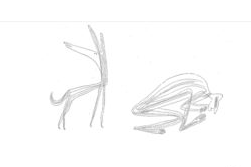
This image by Paul Klee is called Whose Fault is it?
Stephen’s death and the way it was handled was an everyday occurrence. You and I are unlikely to have someone like Colleen to spearhead efforts to bring some good from the situation. She has since set up Stephen’s Voice on Facebook, dedicated to raising awareness of the issues.
Stephen’s death and the failure of his inquest to move things forward opened up possibilities to write to Departments of Health throughout the Western European Archipelago (Ireland and Britain), as well as to the Guideline makers in the National Institute of Clinical and Healthcare Excellence (NICE), drugs regulators, the British Medical Association and Brenda Hale, the then Chair of the British Supreme Court, drawing their attention to the fact that the medical literature on drugs like sertraline is almost entirely ghostwritten and there is a total lack of access to the data from clinical trials on this and all on-patent drugs.
The letters to and responses from these bodies are linked to the 7 posts below. Extraordinarily, the responses make it clear the powers that be know about all the problems – the ghost-writing and lack of access to the data – but feel helpless to do anything. Instead, they quickly jumped on a phrase, I supplied them with – it’s not our job to police the medical literature.
- The Death of Stephen O’Neill and You
- The Perfect Killing Machine
- I Recognise these Constraints
- Orders from Nowhere that Kill
- The NICE before Christmas
- There is no Sanity Claus
- Doxycycline and Stephen O’Neill
What is true for the Western European Archipelago is almost certainly just as true of the powers that be in the United States, Canada, Australia, New Zealand, Europe, Japan, Korea, China and India.
The Crack of Doom
Can good be brought from a death like Stephen’s? The 15 linked posts above are the most that I (DH) have ever written about one person and his case.
[There are later posts/letters, now of fascinating historical interest, to both Michelle O’Neill after she became Northern Ireland’s First Minister and Jeffrey Donaldson who was then her partner in the post. See Escape from a Prescription Drug Maze. You’d have to Norn Irish to understand this title].
I’ve been involved in an almost endless series of inquests for heading toward 30 years, where decent families have been seeking to alert others to the risks of treatment rather than trying to hold doctors or anyone else responsible.
Samuel Morgan’s death in Wales was one of the saddest. I spent time in this case trying to liaise with his doctor before and since the inquest, trying to get him to do what only a doctor can do to help make treatment safer for the rest of us.
Samuel lived in South Wales, where some of the healthy volunteer trials of SSRI drugs took place and where the capacity of treatment to induce suicidality and enduring sexual dysfunction in healthy volunteers became evident several years before the drugs came on the market.
Where also the leading medical officer in the Welsh Government had acknowledged an awareness of the ghostwriting of the medical literature and lack of access to the data. There was a chance for Dr Adams to do far more than almost any other doctor can do in circumstances like this – had he chosen to ally with the family.
See High Noon: Do not Forsake me Oh My Doctor.
Colleen is aiming at an online presence that might work its way into Tik Tox and other algorithms – so she will appreciate your linking and spreading this post. There is a growing global awareness of the Prescribed Harm idea in many venues, helped in part by Stolen Lives and the extra coverage it generates.
Unlike Stolen Lives, Prescribed Harm normally has no physical events, but this year there is a PHA Day walk with all proceeds going to Katinka and Antidepressant Risks.
Given an online presence and a physical events focus with the growth of both escalating, and determined women behind them, it looks as though if Colleen doesn’t get you Katinka will and vice versa.
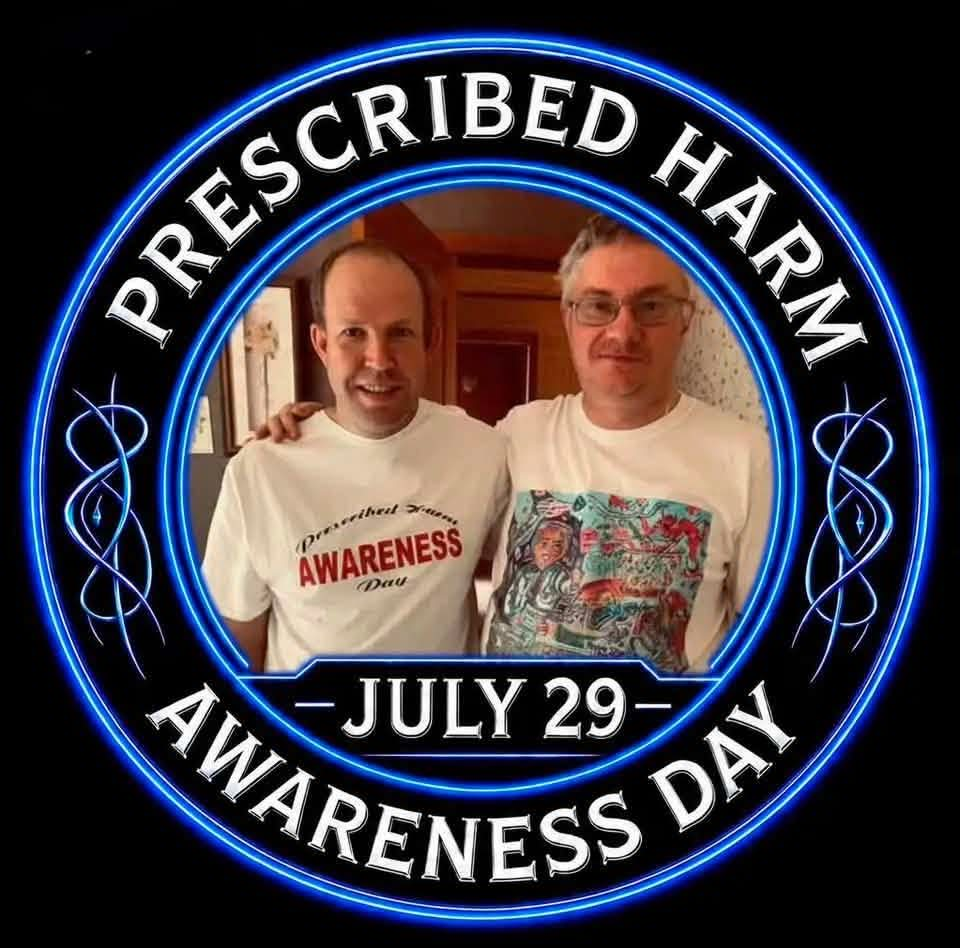
Shane Cooke and Alun, his brother – see comments below
annie says
Doing what Stephen’s Voice does best –
Her defence argues that Lindsey’s mental state had become profoundly altered in the months leading up to the tragedy – no kidding –
13 different psychotropic medications in approximately four months
Kim Witczak reposted
Stephen’s Voice – Suicide Preventio@VoiceStephen
https://x.com/VoiceStephen/status/2080575212056117501
The long-awaited trial of Lindsey Clancy is now underway, bringing renewed attention to one of the most heartbreaking and complex cases in recent years.
Lindsey, a labour and delivery nurse and mother of three, had no criminal history and was widely described by family and colleagues as a conscientious professional and a loving, devoted mother.
Prior to the birth of her third child, there is no public record of her receiving psychiatric treatment or taking psychiatric medication.
Following the birth of her youngest child, Lindsey was diagnosed with postpartum depression and entered psychiatric care. According to legal filings, she was prescribed numerous psychiatric medications over a period of just a few months.
Her family has since alleged that she was prescribed around 13 different psychotropic medications in approximately four months, raising serious questions about psychiatric polypharmacy and patient safety.
In January 2023, an unimaginable tragedy unfolded. Lindsey killed her three young children before attempting to take her own life by jumping from a second-floor window. She survived but was left paralysed from the waist down.
Her defence argues that Lindsey’s mental state had become profoundly altered in the months leading up to the tragedy, with reports that she experienced disturbing thoughts and auditory hallucinations. Prosecutors, however, maintain that she was criminally responsible for her actions. It is now for the court to carefully examine all of the evidence.
Since the incident, Lindsey has remained paralysed and, according to her legal team, has described feeling emotionally numb and has expressed a wish to die.
Her parents have consistently described her as a loving and devoted mother who adored her children. Her husband, Patrick Clancy, has spoken publicly of the unimaginable loss suffered by the family while also pursuing legal action against healthcare providers involved in Lindsey’s psychiatric treatment.
As this trial unfolds, families around the world who have experienced medication-induced harm will be watching closely.
This case is not simply about postpartum mental illness. It is also about whether sufficient attention was paid to the potential risks associated with multiple psychiatric medications prescribed over a short period of time. It raises important questions about informed consent, adverse drug reactions, akathisia, medication-induced behavioural changes and the safety of psychiatric polypharmacy.
No verdict can ever undo the devastation suffered by this family. Three precious children have lost their lives, and countless lives have been changed forever.
Whatever the outcome…….it is vital that every aspect of Lindsey’s treatment is examined with honesty, transparency and scientific rigour. If prescribed medications contributed in any way to this tragedy, those lessons must not be ignored.
#StephensVoice #PrescribedHarm #SuicidePrevention #Akathisia
https://x.com/woodymatters/status/2079304447209902510
‘We can’t prevent what we’re unwilling to examine.’
mary H. says
Well, here we are again – July 29th. is just around the corner.
How wonderful it is that Colleen’s work, in memory of Stephen, is gathering pace – at real speed at last.
Colleen has worked tirelessly on behalf of all who have died, or have been harmed, by simply trusting their doctors’ words regarding prescriptions given to them. All they ever did was take their drugs as prescribed.
We have been in touch with Stephen’s Voice for a number of years now, doing our bit to support their work as “near neighbours”!
We first created our own awareness tshirts a few years ago and sold them within our own withdrawal community, raising money for the Rxisk Research Fund. More recently we added a print depicting the chaos which can surround antidepressant use and their withdrawal. The original, created by a good friend of ours, provided a print which was used to sell on rxisk with the money going, again, to the Research Fund.
This year, we have used a suggestion from Christine Shire – shared by Colleen – of a frame showing our connection to the Prescribed Harm Awareness Day. We hope that Facebook will be awash with these frames tomorrow.
Who knows what will be next in this incredible journey – keyrings using the illustration created by Christine Shire’s frame is one thought that comes to my mind.
With the magic of modern technology which is beyond me, we may end up with a picture of Shane and his brother in their tshirts, showing the back and front illustration. Fingers crossed!
Dr. David Healy says
Mary mistakenly turned to me for help with the magic of modern technology – which is also beyond me. Her plan was to include the picture of Shane and his brother in the comment – this may be possible – but the simple was about it is to put the picture at the bottom of the post above – just under the photo of Colleen – which is where hopefully it will be in a few minutes time.
D
mary H. says
It’s certainly there and looks great. Thanks.
Dr. David Healy says
IT WILL FEATURE AGAIN TOMORROW
d
Harriet Vogt says
Great respect to Colleen and Katinka for doing work the ‘healthcare’ system should have been doing itself for the last 30 years.
As a relative newcomer to the rxharmed space – even though I now understand how and why doctors are programmed to kill, unwittingly, when prescribing antidepressants to some of their patients– I’m still incredulous. It’s as if the aviation industry blithely carried on selling aircraft without being able to assure a safe take off – and/or landing every time.
I was just thinking about a couple of recent tragic and wholly preventable antidepressant induced suicides in medical families we know. Both victims were 100% aware that the SSRI they had been prescribed was the cause of their immediate problems – almost irresistible suicidal urges in one, agitation that morphed into deadly delirium in the other. But, as usual, they were undone by doctors like Stephen O’Neill’s, imagining life threatening toxic effects were symptoms needing dose increases, and /or switching to different drugs.
We’re still waiting for the latest iteration of the MHRA’s SSRI safety comms update . This project started in 2022. But it seems like it actually started in 2003 –noted in the ‘personalised’ letter Annie posted from Andy Burnham to her MP, written in 2006:
‘The safety of Seroxat has been under review by the Medicines and Healthcare products Regulatory Agency (MHRA) since first marketing. Ongoing concerns about the safety of Seroxat in early 2003. including issues raised by Dr Healy, the Seroxat Users Group and Panorama, stimulated a review by an Expert Working Group of the Committee on Safety of Medicines into suicidal behaviour and withdrawal reactions associated with Seroxat (paroxetine) and other antidepressants of the same class (the Selective Serotonin Reuptake lnhibitors, or SSRIs).’
I was thinking this might be an opportune moment for you – if you can find time – to write to ‘Our Andy’.
Barry Haslam – whom you will have known far longer than me but he has become a friend – has also been in correspondence with ‘Our Andy’, the Prime Minister, In a letter dated 2018, Andy, as his local Mayor, thanked him for his exceptional contribution to benzodiazepine understanding and safety – and assured him that the devolved Greater Manchester health and social care system was prioritising social prescribing. I checked it out – and indeed they did/do – social prescribing grew significantly, as it has and continues to do in the UK. But so has antidepressant prescribing. Benzos are in long term decline – we all know why.
The unanswered questions are to what extent is social prescribing stealing ‘brand share’ from antidepressants, in a market where the pathologisation of the human condition seems exponential? And what is going to save the UK government the most money on its disability bill?
Coda
How fabulous to see Shane and his bro’ representing Prescribed Harm Awareness Day. Coral’s brilliant artwork looks stunning on Shane’s T shirt.
(And on my bedroom wall).