
This is the first time RxISK has run 2 posts on the same topic on the same day. Not only that but in addition to the Troubled Dream of Life linking to Drug Induced Loss of Capacity that follows on from this post, Troubled also links to Damnation and Salvation posted on dh.org today.
Finally all 3 also link to both The Eclipse of Science and of Us, Entranced, Spellbound and Mesmerized on DH and to Consent to Waltz, Capacity to Tango on RxISK.
In a case where, shortly after starting an SSRI and developing severe akathisia, a man like Don Schell wipes out his entire family and himself, it can be very clear to a jury that the drug, causing a serious problem, abolished his responsibility for the event. They don’t need to think too hard about the steps from akathisia to Right and Wrong or Responsibility for deaths.
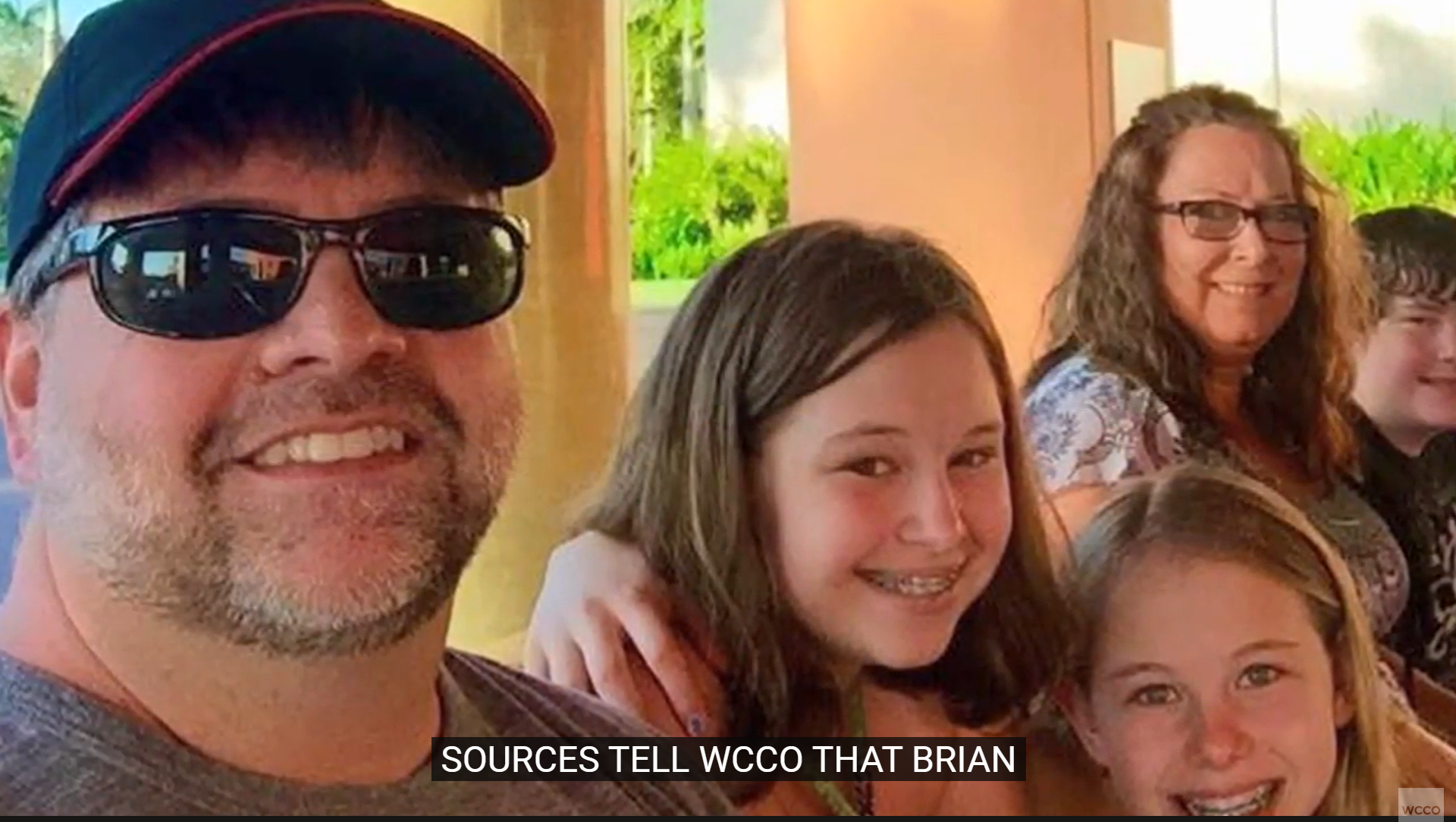
In Minneapolis 6 years ago, Brian Short developed very obvious akathisia on SSRIs, killed his 3 children, his wife and himself. The case was very similar to the Schell case. When it came to accepting responsibility, the clinic where he had been treated, arguing very creatively, initially stalled. The clinic, in effect, accepted they would have been responsible if he had slipped on a banana skin in their building, but were not responsible for something that happened in his own home. Extraordinarily, the clinic had a slate-full of professional medical bodies on their side but, despite this, the argument failed and the clinic settled the case with the extended Short family.
In these cases, a jury doesn’t have to let someone who has killed others walk out of court, or potentially later walk out of hospital, free. If as a juror, in contrast, you have someone who has killed others sitting in court across from you, there are two possibilities.
You may have someone who was delirious at the time and will have no clear memory of the events, in which case the person should walk free from court. Like sleep-walking, but unlike akathisia, delirium is an absolute defense against homicide or other felonies. Unfortunately for us, medical ‘experts’ and lawyers get confused trying to distinguish delirium and psychosis, and can mess up a straightforward Not Guilty by Reason of Toxicity case.
Katinka Newman gives a gripping example of SSRI induced delirium in The Pill That Steals Lives, but grappling with what was happening to her at the time she couldn’t work it out quickly enough to prevent herself being sucked into a medical web and injected by the spiders there. She got trapped and it was only a year later after being tanked up on drugs, when the drugs got stopped in a different hospital that she could finally slot the jigsaw pieces together and both see and explain what had happened. See Katinka and Lindsay here.
More likely, we as jurors will be faced with someone like Lindsay Clancy, who was not delirious and will not have had obvious akathisia, whom the prosecution can plausibly suggest was deliberately or semi-deliberately planning killings. Even if akathisia was present, we will be asked to decide on the defendant’s capacity to know right from wrong as jurors were in the Pittman case – Drug Induced Loss of Capacity. In this case, the jury agreed 12 year old Chris Pittman had akathisia but after the prosecutor pointed the gun he shot his grandparents with at them and asked jurors had this 12 year old lost the ability to tell right from wrong, they could not agree that he had.
Akathisia is one thing. Telling Right from Wrong is another. As a juror we need someone to show us exactly how SSRIs can abolish the Capacity to distinguish Right from Wrong
What SSRIs Do
Akathisia is not what SSRIs do. They can cause akathisia but do not cause it in most people. Akathisia is likely something that develops in part because of the carbonic anhydrase activating effect of these drugs – See Homicide. This leads to a build-up of fluid in places it should not build up in, as in our eyeballs making them feel gritty and uncomfortable and causing glaucoma. Or to build up beneath the periosteum, the skin on our bones, leaving Bruce Springsteen tellingly describing it as a feeling in his bones that left him understanding why people might want to kill themselves – Homicide
SSRIs primarily mute sensory receptors. This action closes the Gates to Perception. LSD acts on the same system and opens the Gates to Perception. Opening the Gates sounds good and closing them sounds less good, but in fact, like Goldilocks, we need the Gates to be just right rather than too open or closed. Too open might be welcomely ‘mind-blowing’, but even if later described as a Good Trip we risk ‘seeing’ what we figure is the Afterlife, God or Traumatic Events in past lives and this can damage us.

Closing the Gates, especially when we are under stress, can be Serenic. We put ourselves into Sensory Deprivation Tanks to achieve effects like this – See Good Trips on SSRIs. Nearly as quick as LSD, SSRIs can produce this Serenic effect within an hour. We got SSRIs because doctors could once spot this effect in us and aimed at making more precise Serenics. Without knowing their doctor is on an SSRI, patients can now spot this effect almost immediately in him or her while doctors on the other hand are now blind to what is there to be seen in us right in front of them and whether the treatment is having the right effect – making us Serene.
The Troubled Dream of Life
An important part of our Capacity to tell Right from Wrong hinges on the gates of perception being open to just the right extent and able to adjust flexibly within the normal range.
From time to time, we all get fleeting images of weird or horrific things but these get nudged to one side by a constant flow of sensory inputs from both outside us but even more so from within. Images of assaulting someone will trigger images of consequences along with bladder and bowel sensations, a galloping heart or catch of breath. The assault doesn’t happen. Our bodies know how to conform us to the Rules. We don’t have to consult a manual or ask the Ghost in our Machine to help sort out what Right is and Wrong is.
If we are deprived of a chunk of sensory input from outside, when in a sensory deprivation tank, one of these weird or horrific images can come to dominate in a way that would not normally happen. People in sensory deprivation tanks have Command Hallucinations.
MRI scanners can semi-resemble a Deprivation Tank and can reduce some of us to gibbering wreck status.
When we dream our attention to the outside is muted and our imagery can go careening all over the place out of our control, stimulated mostly by sensations from within. We can get trapped in troubled dreams or nightmares.
If deprived of sensory input from both within and without, if for instance we are on an SSRI in too high a dose for us …… is it any surprise that SSRIs are the number one drug reported to trigger nightmares. They also badly disrupt sleep and this may endure for years after we stop – Forty Winks,

SSRIs can do all this by day as well as at night. They do it by muting input from both without and within. This removes the distractions that can break a hypnotic trance, increasing the risk that a horrific visual image or commanding auditory experience is going to hypnotize us – See Drug Induced Loss of Capacity.
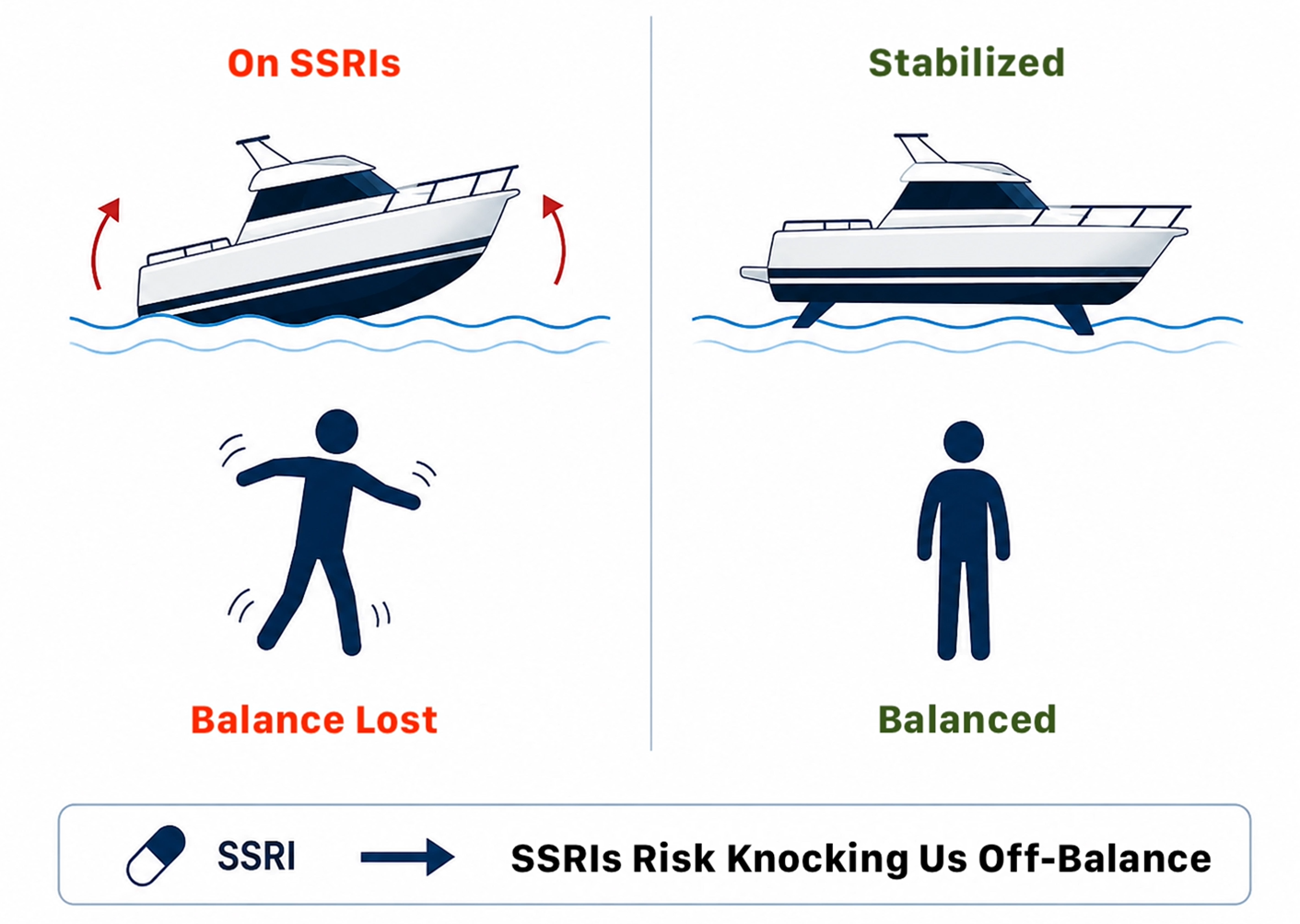
Just as no more than Canute knew he couldn’t stop the tide coming in, there is not a great deal we can do in a boat to stop Tidal Waves but boats have stabilizers to help ride out big waves or storms. Our sensory systems stabilize us. SSRIs risk destabilizing us. The compromise our capacity to ride out events like these – events we are not used to. Without them we lose our balance – both physically and mentally. They are among the commonest causes of loss of balance – see Lonesome Heroes.
How come?
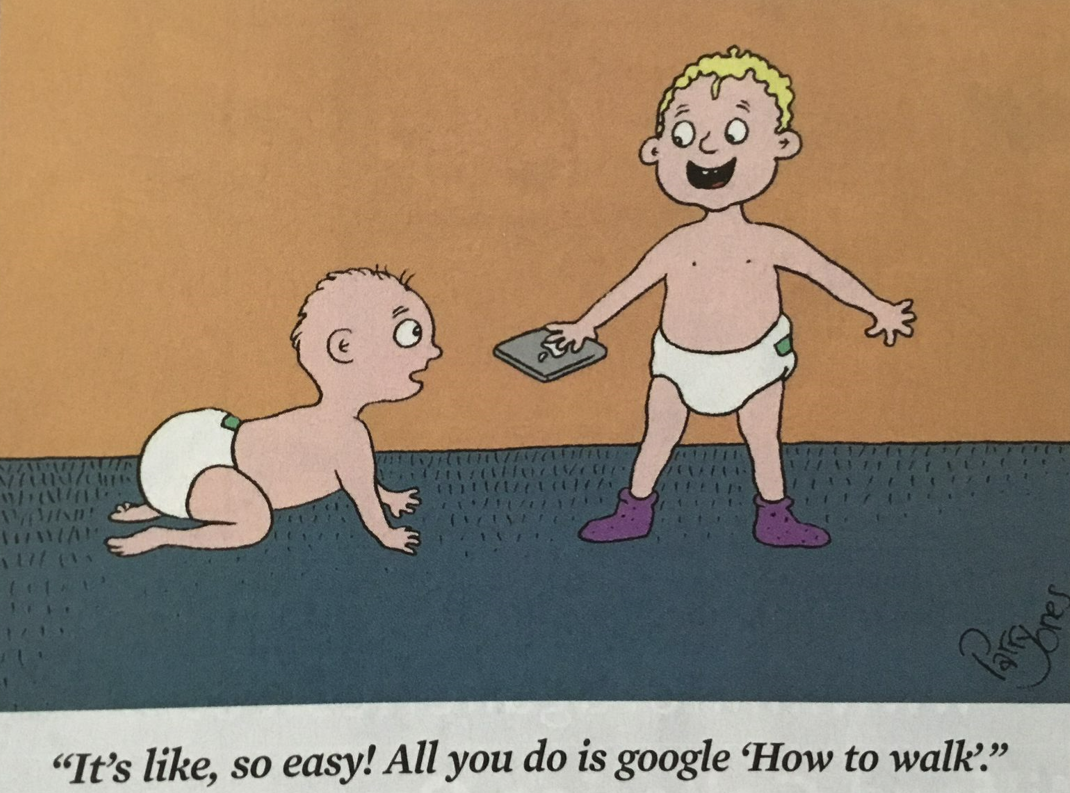
Even taking an SSRI, we can with time develop the capacity to manage Command Hallucinations or Violent Imagery, just as we develop the capacity to ride a bike or ski, or as children we develop the capacity to stand upright and walk. This takes trial and error and time – possibly a few weeks, or sometimes decades – see Drug Induced Loss of Capacity. It happens a lot quicker if there has been a prior exposure. Googling it is no substitute.
Until you are in the boat and facing the wave, you as a juror watching from the bank who has never sailed, cannot tell if you’d have managed the situation. It is possible you’ve sailed before and managed or managed certain problems but not this one and have little sympathy for the current sailor who does not appear to have gotten a grip on things. In either case, the justice system needs to work out what to do about jurors who’ve developed a capacity to manage drug induced problems and those who haven’t. This is not a great mix.
Tangled Web
The prosecutor in the Clancy murder trial told the jurors this case is about Lindsay Clancy’s details – See Damnation or Salvation. It is not about US healthcare in general or healthcare for women. This point has to be correct.

Its a problem as old as time – or at least Job. If God (the system) is unjust our options are to either dis-invent a vengeful God or punish the unlucky innocents who fall foul of the system. Those who are not part of the Elect.
When the Common Law system under which Lindsay Clancy is being tried came into being, it’s proudest boast was that it was better that 10 Guilty men walk free than 1 Innocent man be found Guilty.
Notice the word men. When it came to non-consensual sex in marriage, sexual assault or rape, in practice 10 innocent women would be found guilty (be humiliated) rather than one man be impugned. See Prima Facie.
Anyone who is Irish knows there is a system factor here. Innocent people should be let rot in jail rather than have the System be impugned. As a Lord Chief Justice, Thomas Denning, said in the case of the Guildford Four – See In The Name of the BMJ and In the Name of the BBC: .
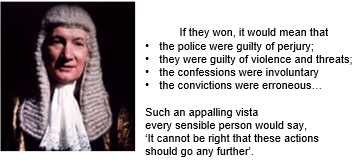
While the Guildford 4 were released 37 years ago, as the references to the BMJ and BBC above show you things have got worse. It is almost impossible for me or anyone else to make a case that a person who has been intoxicated by a prescription drug is innocent and should be let walk out of court free – because it would make the system look bad.
But more than the legal system is involved. The media have bought into this. The media now operate under a Command to avoid False Balance. They are not allowed to let anecdotes blaming a drug, which is all an individual case can supposedly be, weigh in the scales against the marvelous benefits these drugs can bring.
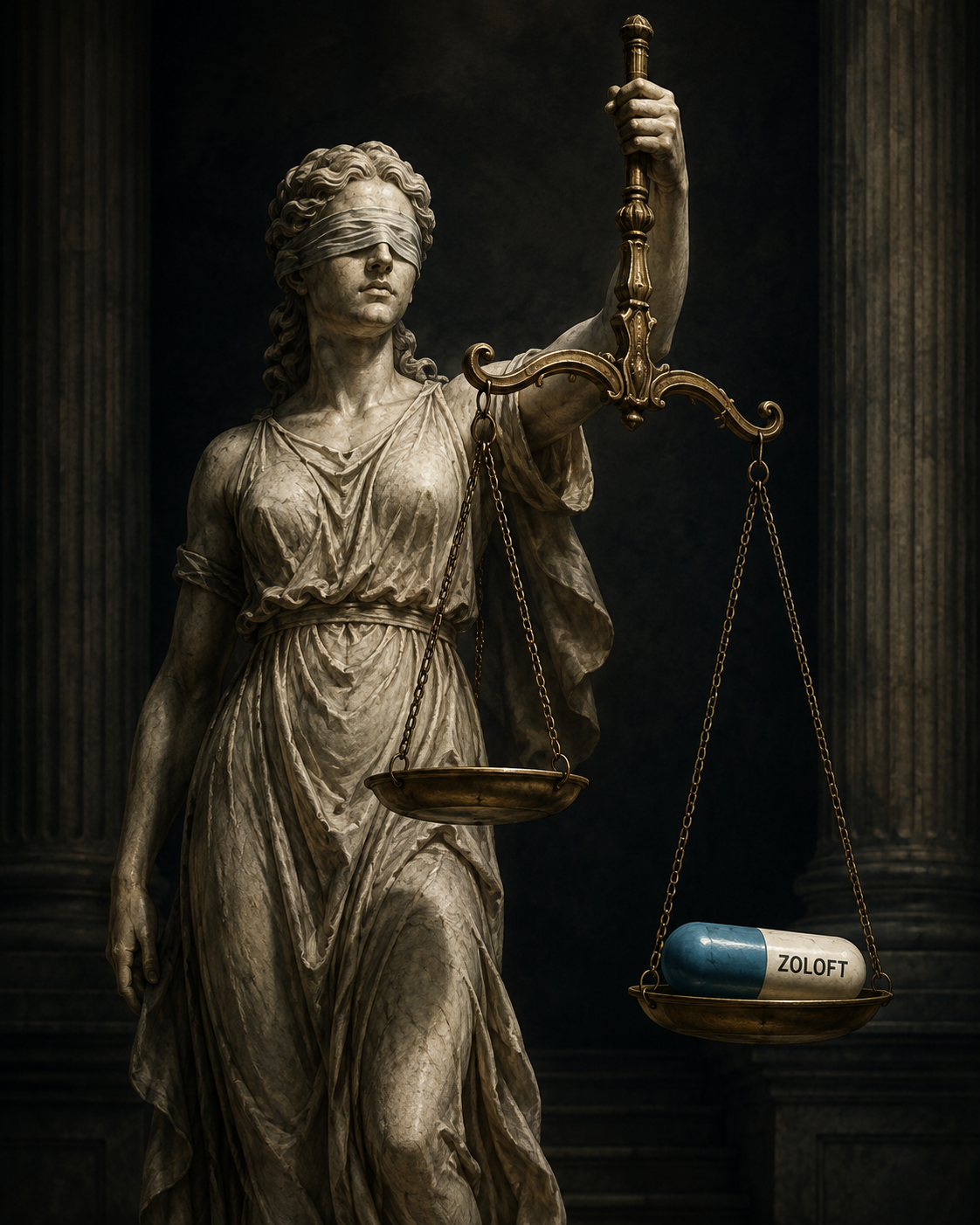
You can maybe see the problem here in the court room but what about in the jury room. When the media want to cover the antidepressants, as sure as eggs are eggs they will want to get some people who have done well on the drugs. These believers are just as likely as the media in a religious country are to say it would be irresponsible to run a story about these wonderful drugs making someone homicidal as it would be to say members of the clergy abuse children.
We can talk openly about sex abuse by the clergy now because the Church no longer scares anyone. That’s not the same on the pharma front, where it’s a mortal sin to create treatment hesitancy. The sin of fostering treatment hesitancy began with the SSRIs not with vaccines. – See Where Does the Misinformation Come From.
A lot of nasty Violence, especially on social media but even in the comments after an article like Katinka Newman’s, gets directed at misinforming non-believers. Often painted as coming from the bottom up, this violence more usually starts at the top with trolls knowing they are protected.
What happens if you are sitting in a jury room with people who will not find against a drug (a sacrament) some of whom regardless of the details may figure they are doing to right thing to refuse to find the drug guilty? An inability to find the defendant guilty is the other side of the same coin.
It’s almost impossible to see how a jury composed of a cross section of those commenting on any aspect of the Clancy case in any media features could come to a verdict in this or any case involving a medicine.
One of the more interesting comments following Katinka’s article is that antidepressants are a consumer answer for a consumerist society. They aren’t. They aren’t a consumer good. They are available on prescription only. The real consumers have their professional experience – their experience of these Obscure Objects of Desire – dictated to them. They learn that whatever they might think looks black is in fact white and they and their professional bodies and medical media go along with this.
If its a sign of a sophisticated mind to be able to believe two things at the same time and still function, we may be losing or may even have lost the ability to function.
It’s not enough for anyone to ‘believe’ the drugs can cause a problem. Someone needs to be able to provide the scenarios drawn from real experiences that will help a juror see not just that things like this can happen but how these meds can potentially cause many of us to lose the Capacity to tell Right from Wrong – and whether the mechanism proposed helps explain the Clancy case.
This will take a collective effort. So if you get around to reading Drug-Induced Loss of Capacity, please contribute any vignettes that speak to the scenarios outlined there or others you think of that can land us in the situation Lindsay Clancy is now in. That speak to the issues we all have to grapple with as patients and might have to grapple with as defendants or jurors.
Getting to grips with the legal issues, rather just putting on a legal show, is one way to get to grips with what happens in clinics – the two go hand in hand.
Spoiler:
I do not know what the outcome of the Clancy case will be or should be. Unless I had a chance to listen to her at length I do not think it would be appropriate to have a view.
chris says
‘when in a sensory deprivation tank, one of these weird or horrific images can come to dominate in a way that would not normally happen. People in sensory deprivation tanks have Command Hallucinations.’
A short while back I was reading about the artist Laurie Anderson, she said this:
“I’ve been spending time in dark retreats, where you go to a place in complete darkness for many days. My next one is going to be double the length. That is kind of where I’m going mentally and emotionally and intellectually, into situations where you can really can confront stuff. Though I can’t say the last one was like that—it was more like a series of amazing hallucinations. Anyway, I don’t really know how to talk or write about it, but that is what I’m doing now.”
Crikey MK Ultra is now a trendy ‘dark retreats’!
Dr. David Healy says
This is a comment from Anne Marie – posted on all three posts in this linked series along with my response
You act on a very over powering compulsive urge/impulse that you cannot stop or control in those seconds or minutes it happens very quickly. You are only focused and thinking on the thing you are going to do. There is not right or wrong thinking at all.
That’s what I felt on ssris and alcohol. There are lots of other side effects too like emotional numbness, detachment e.t.c e.t.c
Dr. David Healy says
This is very helpful and I’m sure it’s true. But we have to explain how it happens rather than just say it does happen. The explanation that works for me at the moment is in The Troubled Dream of Life Post.
There has been a lot of debate as to why SSRIs cause Alcohol Use Disorder – is it because alcohol relieves akathisia, or the SSRIs mute the sensations of getting drunk or it something more like the 2D experience you outline here and is mentioned below. Perhaps its separate things from person to person or some combination
Your comment echoes comments from someone else I saw who had changes to his visual reflexes. My question is how much could changes to visual reflexes give rise to experiences like the ones described here.
There was a loss of depth to my vision. It was more like a two-dimensional video-game. There was a similar loss of depth to my thinking. I was reacting to things on the surface rather than able to see through to the consequences.
If I had an impulse to drive, I would go rather than consider the time or whether I had work the next day. If I had an impulse to go out for a walk, I might go without my phone – or shoes
This man also had altered balance reflexes. How much does out ability to balance physically link to an ability to balance mentally?
SSRIs are among the drugs most commonly reported to FDA as leading to Vision and Balance problems.
D
Anne-Marie says
I don’t know how this also sounds to you but I think there are similarities to autistic people too. An example I read online once suggested autistic children would see the toys in the road but not the cars on the road. This type of thinking is similar to SSRIs. You would have a type of narrow tunnel vision type thinking and not seeing everything else involved. Its like your always on autopilot.
Dr. David Healy says
This comment raises a fascinating point. If our visual reflexes are paralyzed by SSRIs, you might expect tunnel vision from pupils that are constricted. But with SSRIs our pupils are dilated. Perhaps seeing normally needs an ability to shift in and out of focus to get a handle on both context and the novel potentially tricky thing that might have serious consequences at the same time – without which our behavior will lack nuance and depth.
D
Anne-Marie says
I just got this rom ai regarding tunnel vision thinking on ssris.
The “Indifference” Trap: Because the medication reduces your emotional reactivity, you might care less about peripheral concerns, leading to a mental “tunnel vision” where you only focus on what is directly in front of you.
Harriet Vogt says
You wrote: ‘Why did Jennifer Tufts and others fail to badly? Because like Tom Kingston’s and Deirdre Morley’s doctors they were Pathway adherent doctors. They were conforming their behavior to the Rules rather than treating the person in front of them’.
They didn’t even notice A PERSON in front of them – just an abstract pattern of symptoms – on which they used assorted chemical fly-swats.
Shocking testimony from Rebecca Jolotta -Psychiatric Nurse Practitioner, whatever that is:
Dec 2, 2022, Lindsay Clancy messaged Rebecca Jollotta: “I feel concerningly numb… I feel like I’m going to die and I don’t care. What do I do about this?’
‘I said that sounds like depression and anhedonia SYMPTOMS. I would say if you’re feeling unsafe particularly as we head into the weekend, it is important for you to have INFORMATION for psych emergency services open to you…
In her message where she says, ‘I feel like I’m going to die and I don’t care’ – did you take that as a suicidal thought or suicidal ideation? ‘NO’.
https://x.com/GogIvanka/status/2095475613947564140?s=20
The whole trial feels like some sort of grisly charade-disconnected from the actual effects of a carousel of 13 drugs on the person of Lindsay Clancy. Psychiatry still seems to have not the faintest notion of how the pills actually affect us or our sensory systems, but is still banging on about brain stuff – ‘neuroplasticity’, ‘changing circuits and connections’ blablabla (take a bow, PSSD denier, Anita Clayton).
https://www.nature.com/articles/d41586-026-02570-w
As we touched on elsewhere, there are particular aspects of SSRI induced, sensory deprivation that patients are conscious of and articulate clearly themselves.
In response to sensationalist nonsense on X about Lindsay Clancy’s ‘evil eyes’, patient, safety campaigner and fb support group moderator, Sam Hall, talked the science he’d discovered behind what patients know as ‘SSRI eyes’:
‘‘SSRI eyes’ – the phrase patients, families and friends use on social media for vacant, glazed eyes and enlarged pupils on these drugs. I went into the scientific literature today.. 5-HT receptors are present in the cornea, iris, ciliary body, lens and retina. The iris ciliary complex contains 5-HT1A, 5-HT2A/2C and 5-HT7 receptors. Those receptors help regulate pupil size, aqueous humour and the ocular surface.
…The pupil is a balance between two muscles. The sphincter constricts the pupil under parasympathetic control. The dilator opens it under sympathetic control. 5-HT7 receptors on the iris sphincter relax that muscle. The pupil opens because the constrictor loses tone.. Some SSRIs add a weak anticholinergic effect (especially paroxetine) which can push the same direction. Noradrenergic spillover (stronger with SNRIs and with paroxetine) can also stimulate the dilator.
…Larger pupils change how the eyes look. They let in more light, reduce depth of field and can make the gaze appear fixed or wide. In bright light the person may squint or look uncomfortable. In photographs the pupils stay relatively open when you would expect them to pin…’
https://x.com/samhall404/status/2094888659950489881?s=20
Sam goes into more scientific detail that people can read for themselves – but the bottom line, in human terms, is that the way we see, a critical guide in our instinctive navigation of life, can be destabilised by SSRIs – unnatural light sensitivity – lots of patients talk about having to wear dark glasses, poor night vision, shallow perception etc. The sorts of oculotoxic effects you and colleagues wrote about in this paper:
https://pubmed.ncbi.nlm.nih.gov/34366298/
Another literally destabilising effect, blandly described as a spot of ‘dizziness’ in drug labels, is the whole person unbalancing that I guess (science simpleton) can come from the vestibular toxicity known to be associated with SSRIs (hence tinnitus too), as well as maybe other related sensory dysfunction (visual, gastiric?) Patients on reddit share their experiences:
‘Started on a very low does of 12.5mg 15 days ago and have been feeling constantly off balance. I can barely walk without feeling like I’m going to fall over. Is this normal?
‘yes, im on day 20, spaced out, in a bubble, like im walking in a dream state, out of balance, still a bit anxious, here and there, bit scared that i wont go back to normal…
‘I’m experiencing the same thing, along with severe fatigue, which then just makes me feel more out of balance or off-balance. Like I’m walking around in a fog.’
To your point – doctors are not only not ‘treating’ the person in front of them. They have no notion of, nor seemingly any interest in the inner life and drug reactions of that individual. No notion of how the chemicals they prescribe can affect that person at their most instinctive sensory level. Lindsay Clancy’s providers appeared to be ‘treating’ a disembodied, dehumanised, extrinsic symptom collection. No wonder the poor woman lost her mind and committed the most appalling act.
Of course, these drug induced homicide trials are the acid test of whether a society – can face up to the consequences of swallowing an uncritical – diagnosis and pills will save us – narrative.
Harriet Vogt says
As everyone will have heard, i expect, Judge Sullivan has just declared a mistrial in the Clancy case. What next depends on the prosecution presumably – and some technical appeal angle Kevin Reddington seems to have in mind. He seems to have one hour to pull it off.
https://www.bbc.co.uk/news/live/cm3v49dg61gxt
it could have been a very different trial if grounded in actual scientific explanations – as above – of how SSRIs and other drugs affected LC, the individual human being.. But they stuck to superficialities – and this is the result. More non sense.
Harriet Vogt says
Coda
I suppose the point about the Clancy mistral is that it was acutally a success for the Defense.
Enough to cast reasonable doubt anyway.
Dr. David Healy says
H
Thanks for picking these out. They speak to the kinds of effects these drugs can have the jury could have done with hearing more about.
…Larger pupils change how the eyes look. They let in more light, reduce depth of field and can make the gaze appear fixed or wide. In bright light the person may squint or look uncomfortable. In photographs the pupils stay relatively open when you would expect them to pin…’
the bottom line, in human terms, is that the way we see, a critical guide in our instinctive navigation of life, can be destabilised by SSRIs – unnatural light sensitivity – lots of patients talk about having to wear dark glasses, poor night vision, shallow perception etc. :
Another literally destabilising effect, blandly described as a spot of ‘dizziness’ in drug labels, is the whole person unbalancing that I guess can come from the vestibular toxicity known to be associated with SSRIs (hence tinnitus too), as well as maybe other related sensory dysfunction (visual, sexual etc) :
On Reddit patients are saying:
‘Started on a very low does of 12.5mg 15 days ago and have been feeling constantly off balance. I can barely walk without feeling like I’m going to fall over. Is this normal?
‘yes, im on day 20, spaced out, in a bubble, like im walking in a dream state, out of balance, still a bit anxious, here and there, bit scared that i wont go back to normal…
‘I’m experiencing the same thing, along with severe fatigue, which then just makes me feel more out of balance or off-balance. Like I’m walking around in a fog.’
These all vividly illustrate the impact the drugs can have. It would be great to just sit and listen to LC describe the effects of the drugs on her and think about ways to make these live for juries
D
Harriet Vogt says
I had an idea – what about a virtual reality headset – about which I know nothing – except it sounded promising.
I asked my mate Grok, who was very helpful:
‘And yes, a VR headset could simulate many of the perceptual effects that SSRIs sometimes have on vision, though not the underlying physiological causes or non-visual sensations
SSRIs are linked in real-world reports and studies to ocular side effects that include:
* Blurred vision (especially near/focusing difficulty due to effects on accommodation)
* Mild dry-eye symptoms that can make vision fluctuate or feel “off”
* Pupil dilation (mydriasis), which can cause light sensitivity/photophobia and reduced sharpness
* Photopsia (flashes or sparks of light)
* Visual impairment or reduced acuity
* Less commonly reported: visual snow, floaters, afterimages/palinopsia, night-vision issues, or (rarely) more specific retinal or optic changes
Modern VR headsets render the entire visual field, so software can apply post-processing effects in real time that closely mimic the appearance of many of those symptoms:
* Gaussian blur, depth-of-field shifts, or fluctuating sharpness → blurred or hard-to-focus vision
* Brightness boosts, glare, bloom, or reduced contrast → light sensitivity from dilated pupils
* Overlay noise/static → visual snow
* Semi-transparent drifting shapes → floaters
* Bright particle flashes or brief over-bright spots → photopsia
* Image trailing or delayed “echo” frames → afterimages/palinopsia
* Color desaturation, chromatic aberration, or mild distortion if needed’.
VR headsets may be a great way of dramarising all sorts of SSRI (and other drug) induced sensory effects to jurors.
Now over-excited about VR’s potential , i just checked out its use for simulating tactile sensations with you know who:
‘Yes, VR + haptics can already create useful and immersive tactile sensations — especially for gaming, training, or simulation purposes — but it’s not yet at the point where you forget you’re wearing devices and feel true touch the way high-end visuals can fool your eyes. Progress is steady, particularly with better gloves and full-body systems.’
Is this how we re-create the person’s inner world experience of medication for jurors? A sort of inner dashcam?
Dr. David Healy says
This is happening but it’s not clear how helpful it will be. I can imagine it helping some voices but not others. The command hallucinations in this case are different to other hallucinations. Many hallucinations are benign.
We’ll have to wait and see how it develops. It may take people to tell us the experiences are superficially similar but in practice different – as they did way back telling doctors when they became suicidal on Prozac that they had been depressed and suicidal before but this was different.
Our problem is that we have very sophisticated Apps in front of us – people. But we manage to ignore them. Gadgets always look so appealing
D
D
Jack Noble says
A comment from a colleague Jack Noble – see his comment after Damnation and Salvation
After reading this post and the Drug Induced Lack of Capacity post, I am struck by the redundancy of observations and theory about their origin and dynamics. Your acknowledgement, I think, sums it up.
Acknowledgement
This post is based on the insights of people who’ve contributed to RxISK – both those who’ve been on the meds and those living with them. Almost nothing has come from me or from anything medical – other than some sense as to how self-serving medical insights can be.
I believe you have made telling points in explaining Ms. Clancy‘s murderous behavior and the part that deficiencies in the U.S. health care system as well as the deficiencies in practitioner diagnostic and treatment involved. I suspect this is the case with respect to all medical practice but especially psychiatry. During my stint at SUNY Buffalo with a joint appointment in Social Work and Rehabilitative Medicine, non-psychiatrist physicians pointed out that the medical school faculty steered its weakest students into psychiatry instead of flunking them out.
Finally, I am skeptical about all medical practice, considering all diagnoses and prescribed treatments no better than the toss of a coin with a 50-50 chance of success at best. The more specialists you see, the more likely you are to die as the result of multi-pharmacy—the leading cause of death after heart disease, cancer and stroke. The root cause, long ago pointed out by the medical sociologist Renee C Fox, Experiment Perilous: Physicians and Patients Facing the Unknown (1st edition, Free Press, 1959), is the inherent uncertainty of medicine. I am not blaming medicine for the moral hazard that surrounds medical practice. The blame belongs with the politicians who pass laws that privilege physicians and their professional organizations.
david healy says
This seems to me a really important comment. Jack is pointing to the moral hazard of prescription-only arrangements – they are almost certain to cause the problems we have seen in this and related cases and medicine does absolutely nothing to recognize the problems and attempt to make things safer.
The Good Doctor is now the one who is Good because they adhere rigorously to the Guidelines – and have become killers. How long can doctors continue to be innocent. The problem is if we accept the giving of medicines is unavoidably hazardous, the answer may be doctors can continue to view themselves as innocent until the end of time.
David
chris says
“The Good Doctor is now the one who is Good because they adhere rigorously to the Guidelines – and have become killers. How long can doctors continue to be innocent. The problem is if we accept the giving of medicines is unavoidably hazardous, the answer may be doctors can continue to view themselves as innocent until the end of time.”
This was being written all over the face of the psychiatrist from that Friday into the Monday evidence.
There will have to be lawsuits that hit home. What other way is there. It’s got to stop.
I was amazed that 11 out of the 12 jury found it was not beyond reasonable doubt. Thought it was going to be the other way round and maybe one or two held out.
Harriet Vogt says
Somewhere – I can’t now find it – you questioned the sense of ‘Altruism’ as a driver of filicide – wasn’t it more ego-alien? That jangled with me too.
Curious, I moved on from Resnick to a book you’ll know but I didn’t – Cheryl Meyer and Michelle Oberman’s, ‘Mothers who kill their children. Understanding the Acts of (US) Moms from Susan Smith to the ‘Prom Mom’. Published in 2001.
Whilst respectful of him, their criticism of Resnick, is that his 1969 motivation- based typology is founded in old psychiatric case literature – and therefore fails to understand why mothers kill their children in the context of their modern lives. I agree with them. Whilst Resnick’s typology lacks the substance and subtlety (my circumlocution for the nu**** word – also on the squirm list) of any ‘higher level’ analysis, Meyer and Oberman’s thinking is absolutely grounded in the details of the lives of mothers who killed– and is anything but reductionist.
I’ve skimmed the book – but the chapter that caught me was – ‘Purposeful Killing-Neither ‘Mad’ nor ‘Bad’. As they said, pretty obviously, the idealised construct of motherhood is perfectly nurturing – which is why any woman who murders their children tends to be labelled mad or bad. But when you look into the individual cases, very few are simply either.
We read about women who are in intense states of emotional distress, often suicidal. They are trying to be ‘good mothers’ in the maelstrom of relationship breakdowns, custody battles, financial insecurity, extreme cultural alienation – and they cracked.
A recent Chinese immigrant to LA, Ophilia Yip, was so alienated by the toxic culture she committed filicide and suicide by driving her van off a pier into the LA Harbour. Resnick might define this as altruism – it feels more like despair to me.
A couple, like Theresa Lynne Cheek, went literally mad:
‘On the day of her son’s death, Theresa Lynne Cheek told her husband she planned to get the devil out of him…after her husband left for work, and in an apparent attempt to save him from what she thought would be eternal damnation, she killed her two and-a-half-year-old son. When attempts to strangle him were unsuccessful, she stabbed him in the heart and then tried to set fire to his body to drive out the demons.’
In several cases, Kimberlee Snyder and Debora Green, antidepressants and other psychotropics were implicated:
‘Only one month after giving birth, signs were already emerging that Snyder was suffering from postpartum depression… The midwife, referred her to a psychiatrist for further evaluation. Upon examination, the psychiatrist prescribed ANTIDEPRESSANT medication…On the day of the murder, Snyder woke in what she claims was an AGITATED state and began hitting and shaking Taylor Dawn…after shoving a baby bottle in her mouth until she bled, she begn slapping her in the face…Snyder explained that she felt like she was having an out of body experience and like a demon had taken over her body..’
‘Michael was involved in a relationship with another woman, he told Debora he wanted a divorce. In September he attempted to have her involuntarily committed because he thought she was abusing alcohol and a suicide risk. She admitted herself to a different hospital and was prescribed ANTIDEPRESSANT and ANXIETY medications. . On the night of October 23,1995 , Michael and Debora had an argument and he threatened to take the children away from her. Just before midnight the house in which Debora and the children were living erupted in flames..;’
As remains the case to this day it seems – the presence of prescribed medication is assumed to mean that the person taking it has a ‘mental illness’ – not that a drug recently initiated might have driven them crazy.
Ofc the biggest weirdness in the Clancy trial – apart from barely a mention of the 13 drugs prescribed that made her feel worse – is that she is silent. I gather this is the norm for NGRI pleas – presumably the person who is likely no longer ‘mad’ or ‘drug crazed’ is assumed not to be their own best advocate. That’s quite an assumption.
Dr. David Healy says
I wonder if things haven’t changed again since 2001 and the book you mentioned. One of the chilling points in Katinka’s recent 8 minute video of what happened her was when she said she lost all feeling for her children. This profound lack of emotion, lack of empathy even for your own children is vastly more common with SSRIs than with anything else. She’s lucky that things like this cleared when she stopped the meds – they don’t always clear.
This might also map onto what happened the men who killed their families mentioned in Entranced Spellbound Mesmerized – none of them seemed remotely altruistic. They were buffing up their masculinity.
There doesn’t seem to be anyone who has reconsidered any of this in the light of SSRIs.
David
Harriet Vogt says
You’re right – the cases in – ‘Mothers who kill their children’ – were all late 20th century, before the SSRI sensory deprivation tank took over from mostly I assume TCAs.
I’ve been trawling for insights into IPV (‘Intimate partner violence’) and family annihilation committed by men. An extremely unexciting expedition.
Theoretical frameworks galore – patriarchy as root cause, neighbourhood theory, attachment, enmeshment, intersectionality perspectives etc. etc.
Typologies – verging on faintly interesting – Self-righteous, Disappointed , Anomic, Paranoid. The male tendency to project blame – hmm.
https://www.bcu.ac.uk/news-events/news/characteristics-of-family-killers-revealed-by-first-classification-study
The usual predictable lists of risk factors – abusive relationships, suicidal behaviours, broken families, isolation – and inevitably alcohol, illicit drug use, mental ill-health..
https://www.gov.uk/government/publications/key-findings-from-analysis-of-domestic-homicide-reviews/key-findings-from-analysis-of-domestic-homicide-reviews
It’s exactly like the UK’s Suicide Prevention Framework – a macro-analysis of banalities – that are not wrong, might conceivably lead to some useful preventative measures. But they give us no feeling whatsoever for the inner lives of men who kill their families. One tough call is that the majority of these guys kill themselves.
As usual, despite ‘mental ill health’ being a Belisha beacon for investigating the role of prescribed drugs – nada systematic. Steindór Erlingsson’s post on Rxisk– The man who thought he was a monster- and Katinka’s description of being rendered affectless – finally woke me up:
‘A few days after I started taking Cipramil, terrible thoughts came into my mind. I wanted to harm my wife and new-born son. Every time I saw a knife or thought about one an incredibly strong urge to injure them erupted’
Within a week of starting Prozac, Emily began to become obsessed with killing her mother. Never before had thoughts like these entered her mind. She imagined taking the eight-inch chef’s knife from the kitchen. She saw herself sneaking up on her mother at an unsuspecting moment … and plunging it into her back…. In her words: ‘It came out of nowhere’
I assume that there are many more of us who did not give in to this terrible urge.’
I had another thought .We all know SSRIs disrupt ‘sleep architecture’/REM sleep and cause nightmares, some so vivid and physically violent that partners are advised to take cover and sleep elsewhere. I wondered how/if this might impinge on conscious violent imagery such as tortured Steindór. If dreaming is, at least in part, tidying up a person’s emotional store cupboard…Some comments from real people:
‘Anyone having severely sadistic vivid dreams? it feels so real and it won’t stop:( literally every night, it’s messed with my mental health’.
‘Literally had the worst nightmares of my life while taking trin and I thought I was going nuts for a while because I kept getting gory dreams’.
In my dreams, I’ve seen people die, and I’ve smelt their rotting bodies.😩 my child gets kidnapped in a lot of my nightmares or my family die or my fiancé cheats on me. They’re usually vivid and wrenching enough to wake me up.’
‘The feeling it is really the worst part because it carries over into your day to day, or at least for me. The only way I can explain them are emotional nightmares.’’