

None of the psychotropic drugs – SSRIs, antipsychotics – we now have or their clinical effects good or bad have been discovered in/with cohort studies, animal models, brain scans or randomized controlled trials (RCTs). They have been discovered by looking at and listening to people.
At the recent Enduring Sexual Dysfunction Congress and for several decades we have had compelling descriptions of the effects of Finasteride and SSRIs that establish the capacity of these drugs to cause the effects described. We do not need RCTs, cohort studies, animal models or brain scans to legitimize these reports. Irwin Goldstein’s studies on penile smooth muscle and the reversibility of these effects and Will Powers’ genome findings support the legitimacy of personal and clinical observation in a way that animal models, RCTs and cohort studies never could.
These descriptions also open a door to characterizing the problem we are dealing with. It is difficult to move forward without a model for the nature of the disorders we are dealing with,
PSSD and PFS are not
- disorders in the sense of single gene defects,
- epigenetic disorders – enduring effects are not necessarily epigenetic,
- infections,
- primarily neuro-inflammatory disorders,
- cancers,
- drug damage in general,
- drug induced mitochondrial damage specifically.
Along with many people, I have wondered ir epigenetics or mitochondrial disorders might explain the enduring effects of these problems – one of their mysterious features. As outlined below, it is possible to mention things like epigenetics or mitochondria, along with post finasteride effects on allopregnanolone in animal models but without some indication of the nature of the problem in which these might feature, such statements on their own will be relatively meaningless and at present epigenetic and mitochondrial effects, which produce relatively permanent effects are inconsistent with what is seen clinically.
Feedback Loop Disorder
Another option is a feedback loop disorder. Will Powers mentioned this at several points in the recent Congress but most of us were so busy counting the gene deletions he also mentioned we missed this.
The notion of a feedback loop disorder (FLD) may sound strange so let me outline the broad brush evidence that PSSD/PFS are FLDs rather than something else.
Several points consistent with FLD were raised by those affected at the Congress.
- The symptom windows sufferers have, and permanent recoveries some have, are inconsistent with genetic causality, epigenetic effects and cell or mitochondrial damage.
- The crashes that close windows are often linked to treatments that on symptomatic grounds can look like the obvious treatments to give also supports this viewpoint.
- Irwin Goldstein’s evidence of penile shrinkage showing apparently dramatic but reversible smooth muscle effects allied to evidence of comparable effects around the body generally linked to both SSRIs and Finasteride support an FLD.
- A peripheral neuropathy without clear evidence of nerve damage – points to a reversible state. When these states recover there is no apparent damage left behind.
- We now know these enduring effects happen in visual and other sensory systems and may appear on starting, on stopping or after stopping treatment.
Catatonia offers an example of an FLD that shows features like 1-5 above.
Catatonia
Descriptions of catatonia are recognizable in the Graeco-Roman medical literature from 2000 years ago in a way that almost no other modern disorder except epilepsy and diabetes is. (Manic-depressive illness was not described by the ancients).

Catatonia supplied 20% of the patients in some asylums in the first half of the last century. It was the most lethal condition in the asylums as some patients developed delirious states and died from them. People who entered hospital catatonic could remain there for years defecating and micturating in the bed they were lying in. Their failure to recover led to catatonia being subsumed into schizophrenia, a disorder characterized by non-recovery. Everyone was so certain schizophrenia could not recover, there were skeptical responses to claims of cures and sometimes outright derision.
Despite lengthy hospital stays, catatonic recoveries could happen and people left hospital normal – not psychotic. It took decades and lobbying and clear evidence of cures for catatonia to be recharacterized as a syndrome independent of schizophrenia.

We had animal models of catatonia but these contributed nothing other than demonstrating drugs could cause the problem. Making gerbils catatonic (as in this image) became a screening test for antipsychotics but it still took us 30 years to spot that antipsychotics could also cause a lethal neuroleptic malignant syndrome (NMS), now recognized as a form of catatonia.
NMS has links to Malignant Hyperthermia caused by anesthetics and to SSRI induced Serotonin Syndrome.
We could have researched neurosteroids as an explanation for catatonia because cortisol levels fluctuate wildly in this state, along with temperature, blood pressure, heart rate etc. While research on neurosteroids in catatonia should still be done, it would be for what catatonia reveals about neurosteroids rather than what neurosteroids reveal about catatonia.
Catatonia happens in people with physical disorders, or mental disorders or it can be triggered by emotional shocks. Like cardiac arrhythmias, it is a syndrome that needs management in its own right but also after its resolution the triggering factor may need managing.
Given its mental aspects and faced with patients who seem willful and whose behaviors involve an inability to prevent themselves copying an examiner’s movements or doing the opposite to an examiner’s requests, you might think brain scans would help us nail this down.
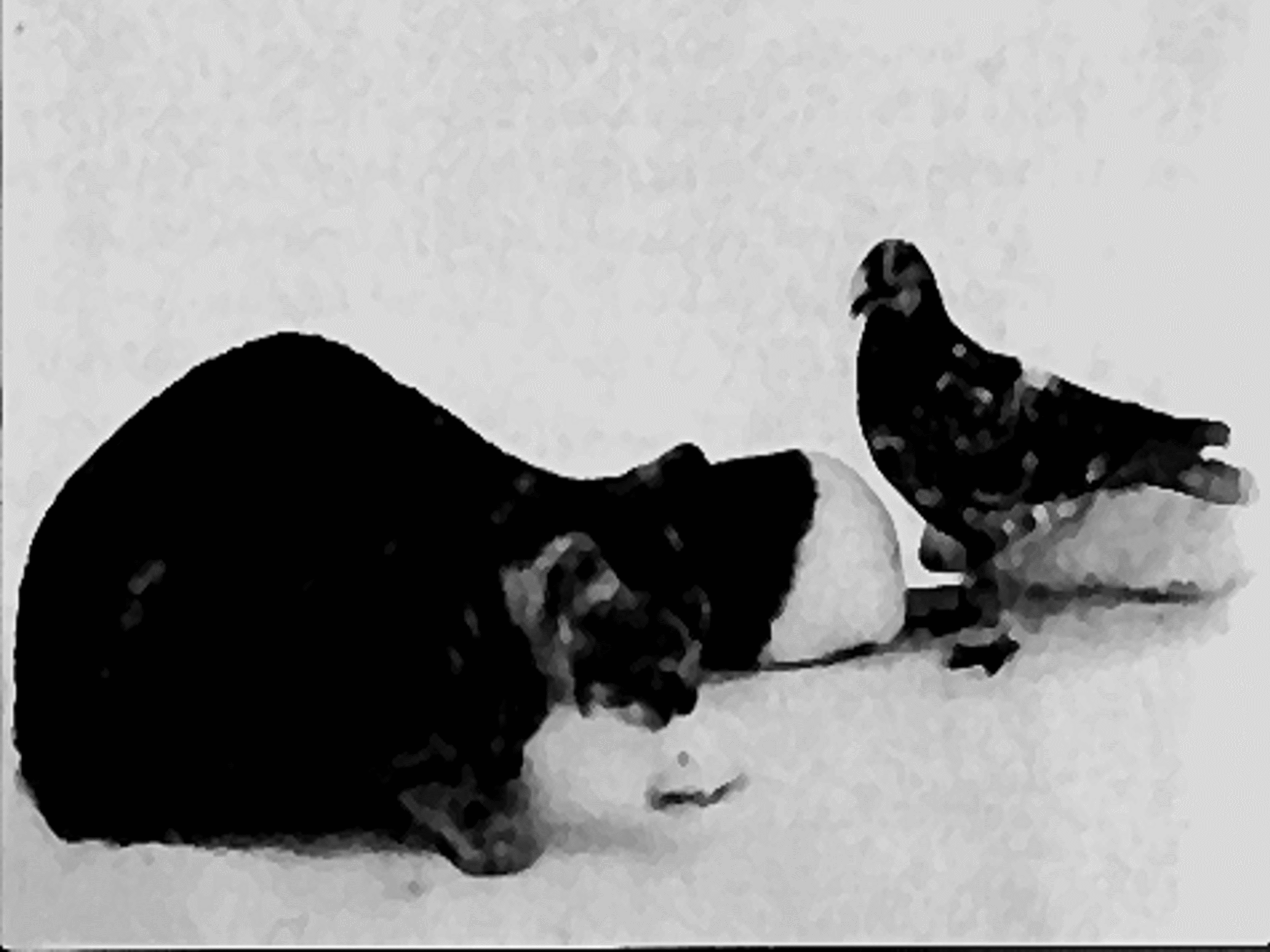
Common sense, however, would have said that when we can make seagulls and mice catatonic brain scans are unlikely to reveal much of use. The problem looks like it lies at some lower sensori-motor level. Catatonic patients either feel no pain or simply do not respond to it – you can pinprick their cornea without them even involuntarily flinching.
Does this put us in a serious scientific bind? No. We accidentally found a cure in 1930 but no-one noticed. We noticed a definite cure in the 1940s. The condition then began to disappear – it is still there but we usually nip it in the bud accidentally without even knowing we have done so.
Faced with a catatonic or NMS patient now, I can restore them to normal in a matter of minutes. I can teach them what to do when they feel an episode coming on to prevent it developing any further. The key is a benzodiazepine in a high dose – it was barbiturates in 1930. When these treatments fail electroconvulsive therapy (ECT) works usually only needing one dose, where treating depression might need 6-12 administrations.
I liaise closely with a full-time epigeneticist on issues like acetaminophen (paracetamol) and birth defects and the link to autism spectrum disorder (ASD) and I’m well versed in the epigenetic effects of valproate and other anticonvulsants, fluoxetine and other SSRIs. The epigenetic effects of acetaminophen come second only to valproate in impacting on ASD genes. Acetaminophen also works on serotonin systems.
At one point, like many of us, I figured epigenetics might explain the enduring PSSD effects. I told my epigeneticist about PSSD and she said nope. She said give them ECT.
Even though I have run an ECT service, prior to Irwin Goldstein’s smooth muscle data I have not mentioned ECT to anyone with PSSD. Not even after a patient told me he’d been cured by ECT. I was prepared to concede he might have been windowed perhaps but figured it was likely the anesthetic or muscle depolarizing Suxamethonium or Rocuronium given to paralyze muscles had made the difference. I’ve followed him up over several years and his consistent story has been that ECT was not a complete remedy but made a substantial difference.
On the basis that anesthetics rather than shockwaves might be playing a part I drew up a project and attempted to get anesthetists to see could they induce windows in PSSD patients. They refused to engage. However PSSD patients get anesthesia for other reasons and the longest window I have seen for PSSD has been 3 months in a person given sevoflurane an anesthetic that damages mitochondria for an operation in a man’s groin area.
Will Powers’ repeated mentions of resetting and rebooting the system map well onto these effects. An FLD points to a stressed rather than broken system. There may, however, be more than one way to reboot stressed systems.
In the case of catatonia, the careful science that brought an extraordinary drop in hospital stays and increase in lives saved came from watching what was happening in and to people right in front of us. It did not come from animal models, brain scans or cohort studies.
Tardive Dyskinesia may be the original enduring post drug dysfunction. For over 60 years, we’ve checked genes, receptors, enzymes, brain scans etc. Cohort studies suggest people who have lost their teeth are more prone to it. In TD there may be also be damage triggered by toxic treatment dosages but at the moment TD stands as a symbol of the failure of careful high-powered science. Have we looked in the wrong place? We have focused exclusively on brains and been seemingly unaware of the large amount of dopamine in peripheral sensory receptors.
Two Missions
Catatonia reveals another point to note. There are two separable missions. One is to understand a disorder. The other is to remedy it, which can often be done without understanding a disorder’s fine details. A remedy for some of those affected may reveal more than one disorder. If we remain unaware of this possibility, we risk going around in circles.
I find it difficult to see the lay scientists (demoted to patient advocate status at the Congress – inappropriately?) being prepared to tolerate an extended and careful research program that pushes to one side the research on remedies that Will’s work has opened up. This is not a moment for a triumph of credentialism.
We need to wait and see how Will’s efforts to remedy the problems turn out. I expect a complex picture – clear responses in some with others not responding – as might be expected from an understanding in principle but only partial understanding of the details of a condition. There may be more than one way to disorder feedback loops that end in comparable final outcomes.
Repeating what Will has done for PFS in people with PSSD may help shed light on this, not least because there are equal numbers of women who have PSSD.
There is also room to think that disordered gut or other microbiota and other factors may be ancillary stressors in some of those affected and that these require careful studies in even more clearly defined subgroups to put right but also to advance our understanding more generally.
The Congress was not just a first congress, it also provided breakthroughs that might not otherwise have happened. These included a recognition that Irwin Goldstein’s smooth muscle changes are happening around the body and not just in genital areas and Will Powers’ evidence that points to possible remedies.
Any consensus statement that comes out of the meeting will hopefully engage with these points.
Genomes
Finally, Will Powers work on genomes, linking deletions to steroid and sexual metabolic abnormalities – see Ending Enduring Sexual Dysfunctions – has left him swamped with requests for screening and another problem – its find to gene screen his own patients and hold their data but it’s not so fine to hold the data or others, least of all several hundred people – see Grasping the Gene Genie.
I hope to set up a liaison with one or more European university departments to help with this but there is scope for a power to the people moment here – an outline of which is laid out in the Gene Genie.
If you’ve read this far in this post, please hop over to the Gene Genie and perhaps hand it on to someone you know who might know something about developing an App of the kind outlined there or might be able to alert us to other moving parts that need taking into account..
Functional Neurological Disorder – FND
An email turned up this morning after posting this from someone whose PSSD was recognized by a specialist but in writing to her Family Doctor, this doctor labelled it FND.
Some neurologists use an FND label to mean something other than a psychosomatic disorder (hysteria) but it is difficult to get them to specify exactly what the differences are or might be and in practice most of the rest of medicine reads ‘hysteria’ or PTSD and refers the person to therapy to uncover buried trauma and/or prescribes an SSRI.
See My Doctor thinks I’m Faking It.
The consequences for sufferers from PSSD and PFS at present of an FND diagnosis are so grim that these conditions should not be designated as instances of FND any more than Catatonia, Tardive Dyskinesia or Type 2 Diabetes are.
An alternate option is for supporters of non-hysterical, non-psychosomatic FND to specify where FND differs not just from hysteria but also from Feedback Loop Disorders.
Mo says
This is all interesting, and glimmers of hope are to be welcomed.
David says: ‘ Some neurologists use an FND label to mean something other than a psychosomatic disorder (hysteria) but it is difficult to get them to specify exactly what the differences are or might be…’.
Some doctors believe that there is something going on when they describe a condition as a FND. That something is nebulous, but probably exists.
Is the term ‘psychosomatic’ (mind and body) really a synonym for hysteria? It didn’t used to be, psychogenic being the preferred term. I think that there were then seven or so real physical disorders that were especially bound to the symbiotic interplay of the psyche and soma. Research moved things along, such as with the aetiology or interplay with gastric ulcers and H.pylori.
Will Powers seems a scientifically gifted individual doctor to me. I am touched by his being moved to tears about the tragedy of preventable suicide, and by his exhorting his followers on Reddit to keep holding on, real hope is there.
This is what we need. Doctors who care about reducing suffering, and to whom it matters whether people live or die.
tim says
Fascinating. Thank you.
Does the duration of anaesthesia have relevance to possible adverse drug reactions to the series of drugs used for induction, maintenance and muscle paralysis? ( In a person extremely vulnerable to akathisia )
After six and a half hours of meticulous surgery, physical recovery has ben favourable.
Possible emotional resilience has been much slower to return to the preoperative ‘baseline’.
annie says
Motivation is high for all involved and what a credit to all those young people speaking out..Emotionally challenging for all involved and I hope and pray that Love Actually returns as it should do, must do, with so many deprived of something necessary for their existence.
There is no hiding it any more. With the gloss around the edges, MHRA, vocabulary, gives no hint of anything resembling human emotion. So second-rate at expressing anything emotional.
It is unbelievable how these poor kids express their emotions so well, but a whole world of buttoned=up figures come before them. Kicked-off Love Actually, you have to wonder if the forces against them have ever experience Love Actually themselves.
If Love Actually goes on like this, showing themselves devoid of emotion, then who needs pills to give a numbness, maybe it is already there…
Harriet Vogt says
There is such a cruel mismatch between harmed patients’ expectations of neurologists –the omniscient when it comes to brains and nervous system difficulties- and the bizarre reality- most neurologists seem to know nothing at all about drug harms.
On X yesterday, a PSSD sufferer posted this in a thread started by Mark Millich about gaslighting:
‘Yeah man, happened to me £360 50 minute consultation with a professor of neurology for one of the most prestigious universities in London, concluded that I read too much online and that the half life is too short for it to cause such an issue. Lmao’.
Actual content – letter from said Neurology Prof:
‘You asked me about whether Selective Serotonin Reuptake Inhibitors (SSRIs) could be the cause of your symptomology. I explained that I thought this was scientifically implausible, given the very short time you took those for, the time when you took them, the mechanism through which they work qnd their half-life. Furthermore, many millions of people take SSRI drugs and none of them has similar problems and nothing has been reported in the many years of them being used. I appreciate there may be some comments online and one or two papers that might link A with B, but I do not think that these are either justified or scientifically valid. I do not think you have a neuropathic problem, and I do not think there is anything broken in your peripheral or central nervous system. (We’ll maybe give you that last clause, Prof.).
Where I do think there is a problem is in terms of a block – probably related to psychology of some sort…’
https://x.com/PieAreSqwared/status/2057224737948909735?s=20
Loading, as he’s known, eventually had a proper PSSD diagnosis from Uro-neuro, Dr Panicker, at one would guess the same institution.
FND – aka increasingly ‘Feck kNows what the Definition is’- is also topical right now .It seems to have morphed from a psychogenically induced ‘software ‘ problem to almost anything that moves. Why there is a need to postulate an intermediate state explained by some weird ‘brain network misfire’ baffles me – especially since most of the symptoms are bodily (and uncannily close to familiar iatrogenic states). I suppose it’s scientism working overtime to concretise a real state that is too easily dismissed as malingering. And/or territory marking by neurologists.
David Tuller, whom you likely know and Marion flagged to me, doesn’t let FND proponents get away with this conceptual murkiness, viz:
‘For many years, we have been told ad nauseam that FND was solely “a problem of alterations within and across multiple brain networks.” There was no “disease.” The only issue was “software” that needed fine-tuning and retraining with treatments like cognitive behavior therapy and physical rehabilitation.
Now we have a clear acknowledgement that the “software”-only hypothesis is no longer operative. That raises a critical question: If “hardware” or other pathophysiological factors are potentially at play in causing the devastating symptoms that characterize FND, what makes the condition “functional” in the first place?
https://virology.ws/2026/05/20/trial-by-error-so-fnd-is-not-only-a-brain-software-issue-after-all/
And, as he pointed out, the favoured treatments for FND – CBT and physical therapies- designed to work backwards and sort out the supposed brain network issues – make a poor showing in trials. FND ideologues are not deflected.
I did pose your question about FLDs to one of the leading patient advocates for FND- her answer was unsatisfactory.
‘What are “Feedback Loop Disorders”? Is this a recognised diagnostic category, or another loose metaphor being asked to do diagnostic work, like “software-only”? Also FND is not a diagnosis of exclusion.’
What a shame – tethering FND to the complex realities of FLD inquiry would give it far more credibility – than brain network hiccups.
‘
Dr. David Healy says
H
Neurology has several strange blindspots (scotoma is the technical neurological term). One as you’ve mentioned centres on the side effects of medicines. You’d have thought they should be interested. Anyone interested in links between brains and behavior should drool (salivate may be the technical term) at the possible of having something that acts on that link – this should open doors to understanding how humans work.
Another cloaely related, perhaps even the same, scotoma centres on the sensory nervous system. Too subjective neurologists say.
We all have one real (physical) blindspot in each eye. Having two additional functional blindspots seems to be leading to an increasing functional problem. The trail a bunch of neurologists (a nucleus of neurologists?) leave behind them is now easily tracked.
It began with neurosis which originall meant a real disorder of nerves as in epilepsy but then came to mean anything but. Then there was somatization, medically unexplained symptoms, illness behavior, others and now FND.
Will the neurology nucleus ever look at itself and grapple with this functional scotoma they appear to have? What drives a refusal to see, listen to or believe us – who are really there in front of them – positing instead some non-existent chimerical wraiths as the drivers of our behavior?
D
annie says
Love Actually – and Looping Disorders…
Secretary Kenned@SecKennedy
What if the treatment is part of the problem?
In this episode, @LauraDelano shares her journey through years of psychiatric diagnoses, medication, and recovery. Watch now.
#thesecretarykennedypodcast
https://x.com/SecKennedy/status/205713071008218039
The turmoil at the FDA continues with the news that Tracy Beth Høeg has been fired as acting head of the FDA’s Center for Drug Evaluation and Research (CDER) after just six months in the role.
A close ally of former FDA Commissioner Marty Makary, who resigned from the agency earlier this month
and led a panel investigating the safety of antidepressants in pregnancy that has been accused by medical groups of spreading misinformation.
https://pharmaphorum.com/news/after-refusing-resign-cder-head-hoeg-fired
‘Many organizations, including the American College of Obstetricians and Gynecologists (ACOG), have publicly criticized the panel’s unbalanced approach to this complicated and nuanced topic. The discussion focused largely on the risks of SSRIs during pregnancy but ignored or diminished the risks associated with untreated depression in the mother. Furthermore, the FDA panel did not include leaders in the field of reproductive psychiatry but rather relied mostly on the opinions and comments of individuals who are longstanding outspoken critics of the use of psychiatric medications’.
https://womensmentalhealth.org/posts/fda-expert-panel-on-ssris-and-pregnancy/
Loop-the-loop, Beth and Marty hung out to dry…
annie says
looping disorder…
https://x.com/SecKennedy/status/2057130710008218039
Harriet Vogt says
This made me laugh. At the same time as being educational – useful new word – ‘scotoma’.
FND really is a chimera. If proponents cannot say what it is. And cannot say what it isn’t. Then it isn’t.
It feels more like marketing than anything else. Disturbing and worrying for clinicians who treat actual bodily harms and see their patients diverted from proper care. Almost worse for prescribed harm folk– gaslighting tinged with a sense of collusive cover up.
Arguably. it’s a failure of marketing acumen. As you say – you might expect some curiosity (drooling aka salivation) re studying the effects of drugs on human systems. And you would think that in a world where – warmongering, political idiocracies, poverty and the toxicity of our inner and outer environments are the major obstacles to survival – some bright spark might think, hey, guys, neurotoxicology is where it’s at.
As you know, I’ve tangled with neurologists on behalf of prescribedharm – and been reduced to emitting low growls of exasperation. ‘It’s most unlikely that medication could have these effects’. Grrrrr. Is this FND?
In contrast, Functional Looping Disorders make intuitive sense – and dovetail with contemporary systems’ thinking/ technology. Most importantly, they make sense to people who’ve endured harms- the smartest folk out there. Talking to an X friend the other night – Susan – personally reduced in every way by 15 years of 4 psychotropic drugs, nearly died during 6 years of hideous withdrawal – only to be reborn – as herself. Her reaction to FLD was interesting:
‘In protracted withdrawal from SSRI’S I lost 15 lbs I couldn’t spare and most of it muscle. I couldn’t understand the muscle loss other than in the context my body was so damaged it needed to consume muscle mass for enough energy to survive? I’ve worked very hard to slowly rebuild my muscles.
It’s definitely metabolic in some way. I lost half my hair. Fell out by the handful like I just had chemo. Lost teeth. Skin lost collagen. Hair is still growing at about 50%. Only 3-4 inches of growth in 18 months. It’s a long hard road rebuilding your body after years of neurological and metabolic dysfunction’.
https://x.com/BlackshepSusan/status/2058321435966185654?s=20
Harriet Vogt says
I meant to include this pertinent post from PSSD sufferer, Jorge. He was part of the FLD conversation with Susan:
‘I do think Post SSRI Syndrome (PSSD) also affected my muscles.
I feel weaker, and “softer”, even though I have had the same level of exercise and diet.
I don’t know if I’m the only one? Could this be possible?
It’s just incredible the level of damage some few doses of an SSRI can do to some…’
https://x.com/redpavement/status/2058268895065288953?s=46
He’s was waiting for his DUTCH test.
annie says
Carney warned about public anxiety over mental health, firearms after Tumbler Ridge, B.C., shooting
Jim Bronskill · The Canadian Press · Posted: May 26, 2026
https://www.cbc.ca/news/politics/tumbler-ridge-emerging-accountabilituy-narratives-9.7212766
It added that some themes likely would grow in prominence over the days and weeks to follow, including questions about mental health.
“Families and observers have raised concerns about whether warning signs were missed,” the memo said.
Carney remains in the picture…
Vic says
Functional means not structural. If nothing shows up on a scan of some sort then the default is to make the presentation functional (in one’s mental processes).
There is no way of evidencing what chemicals and substances do what and how. The vast majority of drugs have UNKNOWN modes of action, UNKNOWN mechanisms, UNKNOWN pathways, UNKNOWN interactions, and a host of other UNKNOWNS.
Diagnostic overshadowing. Symptoms’ (caused by side effects, adverse effects) cascade prescribing. Manufactured co-morbidities.
The primary obsession with PSSD, is highly likely no more than opportunistic for profits.
PSSD can be prevented by producing full disclosure information – which now, after-the-fact, is being printed on Product Information leaflets for consumers and physicians.
It’s called fully informed consent from now on.
The physician has a legal role to ensure fully informed consent. The consumer has a duty to themselves to read as much about a drug, treatment, therapy, before agreeing to upset their brains and bodies even more.
Who, after reading the Product Information leaflet (as a minimum) would subject themselves knowingly to PSSD. ?
[We] no longer have to do as told; and no longer have to defer to physicians as the all-knowing experts and specialists.
There’s no fire. There’s no emergency. There’s no urgency. There’s no heat. And there should be no pressure.