
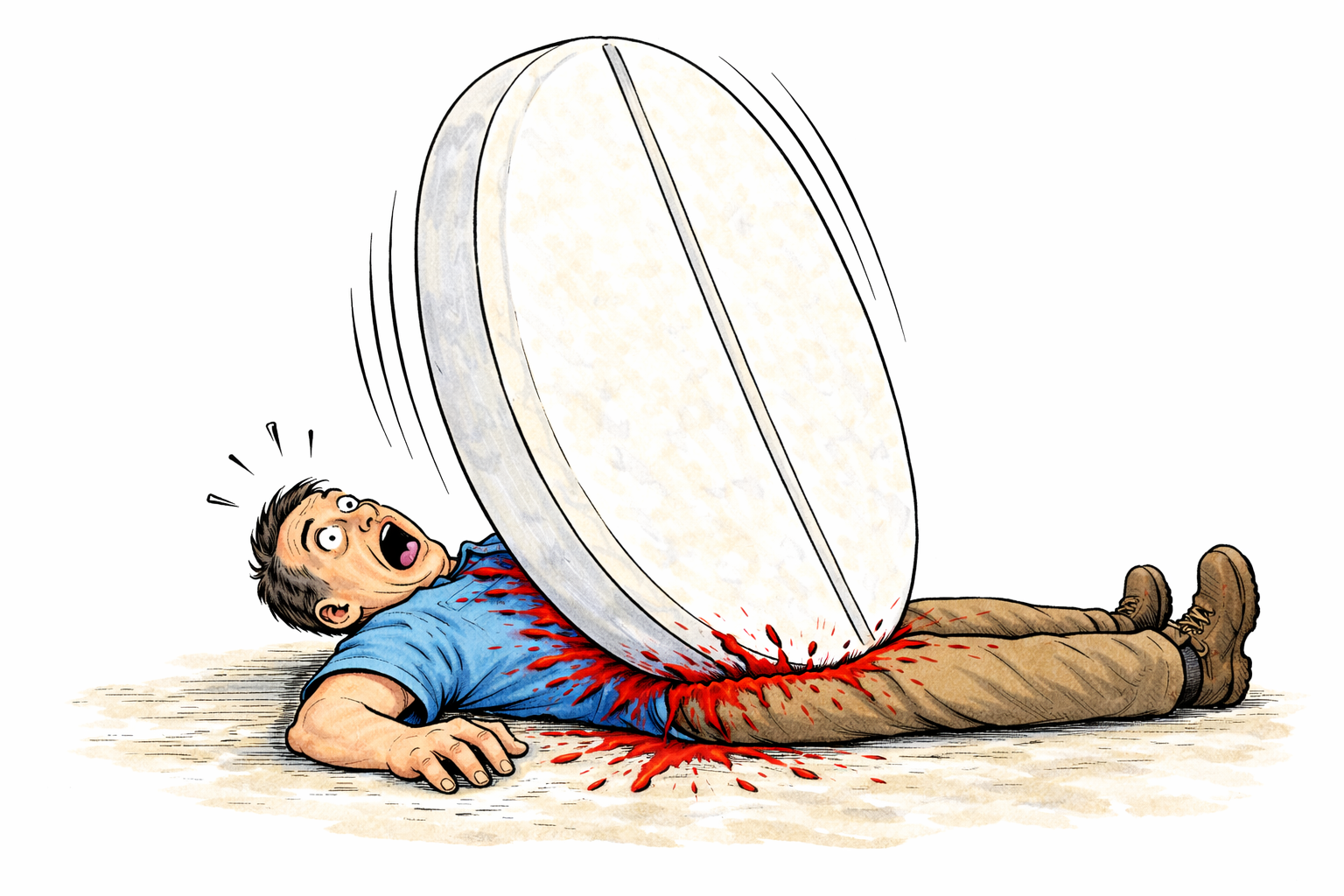
Finasteride, a treatment for Hair Loss, shares hazards in common with Isotretinoin given for acne. These include Suicide, Sexual, vision, bowel and balance problems and notably sexual, suicidal, visual, balance and bowel problems that can begin after stopping treatment and endure indefinitely.
The problems that start on stopping Finasteride are termed Post-Finasteride Syndrome (PFS). PFS shares a lot of features in common with Post-SSRI-Sexual Dysfunction (PSSD) and Post Retinoid Sexual Dysfunction (PRSD) also called Post Accutane Syndrome (PAS).
There are a host of peer reviewed publications outlining the features of these syndromes, diagnostic criteria, articles on epidemiology and consent that can be accessed from the RxISK PSSD page along with a large volume of media coverage of the conditions.
Finasteride raises different questions about consent to Isotretinoin’s use for Acne. Acne is seen as a disease and we have to engage with the medical profession to access Isotretinoin – Isotretinoin and Consent. In contrast Hair Loss in younger men is seen as a cosmetic issue. Cosmesis opens a door to online retailing and concerns that unscrupulous retailers may deceive us. But it also reveals that we may not be any safer with doctors.
The issues involved with these medicines are far from simply being solved by discriminating between health and beauty issues. Identity issues and misfortune – whether we are among the Elect or not – come into play – See The Seductive Charm of Pharmacology.
We have based the Finasteride Benefits and Hazards video embedded here on the template the British Association of Dermatologists (BAD) and the British medicines regulator (MHRA) laid down for Isotretinoin,
The Video Transcript is here.
The key messages in this Finasteride video and our Isotretinoin video are similar and we think contrast with the messages in the BAD video.
- These Suicidal and Sexual Hazards are a toxic reaction to the drug and not part of any mental illness the taker has or may have had.
- The Patient Information Leaflets – Package Inserts – are designed to get people on treatment, not to inform consent or help manage any of the problems that arise.
- Doctors are not able to remedy the damage these drugs can cause and may negligently dismiss the risks.
Influence Day
This year the United States of America will be 250 years old. The combined ages of the small group behind RxISK come to more than the age of this US youngster. Like many youngsters, however, the US wields tremendous influence – way beyond the dreams of RxISK.
We are told Influence needs the briefest of video clips. Here are some clipped out from last weeks’ Isotretinoin Video
Isotretinoin You Tube video clips
Isotretinoin Instagram Clips
- https://www.instagram.com/p/
DU4_EHMjM1i/ - https://www.instagram.com/p/
DU5BdHDDFlQ/ - https://www.instagram.com/p/
DU5B8tbjM4Q/
Isotretinoin Tik Tok Clips
Finasteride Video Clips
We are more on the front foot now, so we have some Finasteride clips ready to go
Finateride You Tube Clips
- Not a mental disorder https://youtube.com/shorts/
8CKEFluK0Vo - PFS https://youtube.com/shorts/_
YmlIe9p544 - PIL https://youtube.com/shorts/
5kvMBoHNNBw
Finasteride Instagram Clips
-
Not a mental disorder https://www.instagram.com/eel/DVEnOnCDCy-/
- PFS https://www.instagram.com/p/
DVEnjawDHQH/ - PIL https://www.instagram.com/p/
DVEnr2-jH7v/
Finasteride Tik Tok Clips
1. Not a mental disorder
https://www.tiktok.com/@
2. PFS
https://www.tiktok.com/@
3. PIL
https://www.tiktok.com/@
If any of our readers who are of the same vintage as us have access to anyone less than one-tenth of the age of the US, who has an Instagram or Tik Tok account and might know how to clip things from an original video, or how to get the clips above into circulation or in some way able to influence folk, please get in touch. We’d be happy to turn over the raw materials.
We would love anyone who thinks they can do better to do so and maybe send their superior versions along in the comments section or link into anything that looks RxISKy on any medium.
Of course we would also welcome input from influencers much older than the US like Ukraine or Persia.
Dr. David Healy says
Britain has a ‘faculty’ of pharmaceutical medicine (FPM) which is a charity and professional membership body not apparently linked to an institution, whose declared mission is to advance the science and practice of pharmaceutical medicine.
‘We’ (sock/glove?) set the highest scientific and ethical standards to help unlock the full potential of new medicines and make sure they are as safe as possible for patients.
Their Annual General Meeting In November 2022 was entitled –
Can we? Should we? Fostering trust through ethical practice
https://www.fpm.org.uk/blog/meet-the-speakers/
While there were some decent people among the speakers, the ethics of others seemed more likely to reflect the ethics of the ruling class – it’s ethical to have a ruling class as Charles 1 said, just before being beheaded, and the ethics of the ruling class just like the ethics of a bureaucracy are to keep on doing this job (which of course means above all perpetuate our role).
For many of the other speakers, especially those linked to the Science Media Centre and Sense about Science about Science, the ethics appear to be about branding all talk of adverse events as misinformation.
One of the speakers may now be giving the rest the same kind of feeling Deepak Chopra, Sam Harris and perhaps Freda Lewis-Hall, once of Pfizer, had when liaising over ideas about Medical Security Teams (MST) with Jeffrey Epstein in 2016. See the comments section on Isotretinoin and Consent post on RxISK.
It’s even easier these days than back then for an FPM to anesthetize all members of an MST with MST (morphine sulfate tablets) and ease any ethical discomforts members of an MST might feel and ensure there isn’t a thought in their heads not put there by pharma.
We are Missing a Safety Team (MST). What would an MST for those of us taking medicines look like – This is an issue these Isotretinoin and Consent and Finasteride and Consent posts seek to get to grips with.
D
Dr Pedro says
There is a not straightforward way forward
Pharma has cottoned on that one of its biggest allies in progressing its aims is the “Patient Voice”.
The self-fulfilling prophesy the FPM – the Faculty of Pharmaceutical Mutilation – lists just some of the Qangos that exist to help patients and the public help Pharma.
https://www.fpm.org.uk/about/committees/working-in-partnership-with-patients-and-communities-forum/patient-and-public-involvement-resources/
1. EUPATI Individual Patient Training
2. EURORDIS Open Academy
3. European Research Infrastructure for Translational Medicine (EATRIS)
4. European Medicines Agency (EMA) Training and resources for patients and consumers
5. PFMD Patient Engagement Training
6. PCORI Research Fundamentals Training
7. Australian Clinical Trials Alliance/ACTA Consumer Involvement and Engagement Toolkit
8. Patients in Publications Online Training Course for Patient Advocates
9. Drug Information Association (DIA) – Various Resources
10. The Patients’ Academy for Research and Advocacy
11. National Institute for Health Research (NIHR)
12. National Health Council Webinar
What would be interesting would be if people with PFS, PSSD, PRSD, or PAS could form a “Patient Organisation” and apply to join EURODIS.
https://www.eurordis.org/get-involved/become-a-member/
Then they could influence Pharma to find a cure.
Watch the secrets of how the FPM values Patient Engagement and builds “trust”.
https://www.youtube.com/watch?v=43nUhCKsG8I
Dr. David Healy says
Pedro
This is a great comment to get and the idea is obviously right in the abstract.
The problem is pharma manages very successfully to pick the right figures – figures who would have credibility even with you to Chair/CEO these bodies. Figures who may even look semi-critical of pharma but somehow nothing ever happens for conditions like PSSD, PFS etc.
Things may never happen because patient groups, who see themselves as hard-bitten, are so pleased to have apparently engaged pharma or researchers they find it impossible to believe they of all people might be led up the garden path.
I know a wonderful person in charge of a Rare Disease Research Group and a while back I put it to that person that PSSD and PFS etc were diseases and rare – why not form a group to research them. My contact didn’t think a Rare Disease Group would buy into this. These are not recognized diseases. And even though factors linked to PSSD are likely causing the fertility and population crises we now have and even though pharma can get expedited approvals and charge vastly more for treatments for rare diseases – this ain’t going to happen any time soon.
D
Dr. David Healy says
Pedro and others
What would you make of this? Women’s voices are prime Real Estate.
Women’s health provides a practical case for examining how lived experience is incorporated into care pathways, platform design, and emerging AI-enabled tools.
In this seminar, Dr. Umbereen Nehal presents HER Heard as a use case for how community-based platforms can organize patient experience to support care navigation, service discovery, and decision-making. Drawing on clinician co-creation work, qualitative analyses of patient discourse, and ongoing platform development, the talk examines how lived experience can be structured for use in care and platform workflows without overstating evidentiary claims.
The session also discusses how agentic AI is being explored within women’s health platforms to support navigation and sensemaking, and how clinician participation in design informs the role these systems play. Using women’s health as a case, the talk highlights considerations for platform design, evidence translation, and the integration of AI into healthcare settings.
About the Speaker:
Dr Umbereen S. Nehal, MD, MPH, MBA is a physician executive and digital health entrepreneur with experience spanning healthcare delivery, policy, and technology. She is board certified in Clinical Informatics, serves as adjunct faculty at Massachusetts Institute of Technology, and is the founder of HER Heard, an MIT-incubated women’s digital health venture.
Dr. Nehal has held senior leadership roles in large health systems and public programs, including Chief Medical Officer for a 14-center $100 million agency in New York City. As a medical director in the Massachusetts Medicaid agency, MassHealth, she served as clinical lead for $1.8 billion in delivery system transformation and value-based care reform. Her work has included advising state agencies, CMS, HHS, NIH, the White House, and international governments like the Netherlands and Saudi Arabia. She is published on medical AI and is lead editor on a book on systems thinking for physician leaders to be published in 2026.
Dr. Nehal has extensive experience in curriculum development and education, including national curricula for patient-centered medical homes, leadership programs for physicians, and global health training initiatives. She is a former co-chair of the Patient-Centered Outcomes Research Institute’s Advisory Panel on Healthcare Delivery and Disparities Research for >$300 million research budget.
She received her medical degree from Aga Khan University Medical College, her MPH from the Harvard Chan School of Public Health, her MBA from MIT Sloan School of Management and is certified in mind-body medicine and as an executive coach.
###
Mass Gen seems to me to have been nothing if not assiduous in cultivating pharma. Perhaps it all looks different from a US perspective
D
Dr. David Healy says
Another thought is that the list of patient oriented groups does not include the BMJ who trumpet their concerns for the patient voice and feature patient centred articles – but never a patient description of an adverse effect and definitely not one where the patient’s doctor might also support the person’s interpretation that the drug caused it.
BMJ Case Reports is similar. It might include a case report of old and established well known hazards but will not break new ground with either patient or doctor reporting something.
It would make quite a difference to everything if BMJ was on the side of doctors and patients. They aren’t.
David
tim says
Brilliant video. Thank you.
Harriet Vogt says
I glanced at Dr Umbereen Nehal’s ‘HER Heard’ – clearly a business she’s hoping to build – to jump on the autonomous systems’ development in healthcare – agentic AI as opposed to passive, dumber AI. Good luck to her,
https://sites.google.com/herheard.com/herheard/home
‘Her Heard’ is currently a website holding page littered with the sort of banalities that make the woman in me – irritable. ‘Empowerment and Respect’, ‘Hear yourself be heard’. ‘We are building a tool and community of support for you to have personalized support to live your best life.’ Pass the sick bag.
The clue was in the blurb you quoted – ‘the talk examines how lived experience can be structured for use in care and platform workflows without overstating evidentiary claims.’ So just a dash of the human female experience then.
There is no point fighting automation – as we all know, public health services are over-whelmed by demand and hugely inefficient. There are initiatives, pioneering no less, ‘to verify, deploy and test Agentic AI safely across health and care settings to ensure it is safe, transparent and accountable’. Really?
https://healthinnovation-kss.com/new-national-agentic-ai-initiative-launched-for-health-and-care/
Wes Streeting, Britain’s Health Secretary, has decreed– that technology, disease prevention and a focus on community delivered care will save the UK’s NHS. Curious that he seems to have been introduced to private health tech firms by his erstwhile mate – now cast into outer darkness, when once he was, the Prince of Darkness – Peter Mandelson.
‘The texts reveal that last June Mandelson told Streeting that if he visited the US there would be “lots of tech companies and people” for him to speak to. While no company was named, the disclosure of the messages comes amid rising concern about the involvement of US tech giant Palantir in the NHS.’
https://www.bmj.com/content/392/bmj.s307
Oh dear, oh dear. How right was the wag on X who said the descriptor , ‘the Elite’ needs to be replaced by -‘The Predatory Class’.
Looping back to the long lost main point of your comment– Women’s voices are prime real estate. Well, 55 years after the magnificent Germaine Greer wrote ‘ The Female Eunuch’ – I’m not convinced that we are being heard at all. I’m not convinced that being conceptualised as ‘women’ en bloc is all that helpful either.
What you end up with is a perspective driven by rights of access for those of us who represent 51% in Western nations, just under 50% elsewhere. The EU women’s health initiative – Closing the Gap in Women’s Health Research – is driving female equality in sample design and analysis, our right to be included in clinical trials when pregnant (no-one consults the baby ofc) etc.
But nobody is really questioning the gendered injustice of women being denied accurate physical disease diagnoses until, on average, 4 years later than men – symptoms being different from blokes’ and assumed to be all in our heads. Nobody is ranting on nearly enough about the fact that we are sold to and prescribed the risks of ‘antidepressants’ twice as much a men in most countries. Nobody is really taking the time to get under the skin of the stats – pushed by Danny Blanchflower – showing young women dominating the global ‘mental health decline’ and increasing number of suicides. No-one has put a bomb under the unspeakably oppressive ‘diagnosis’ – BPD.
Until politicians and health services stop counting our collective surface – and start listening to the infinitely varied female individuals within – we don’t really exist. Except as rich pickings for industry.
Harriet Vogt says
This video was posted on X today by Dr Ross Kopelman, Hair Transplant Surgeon @ Kopelman Hair Restoration
https://x.com/drrosskopelman/status/2025979140197716111?s=20
Of course, Dr Kopelman, who has rather luxuriant hair himself (a nifty transplant by the look of it) has NEVER seen PFS. He also claims that the 1 in 100 men (no source) who suffer with sexual dysfunction do so for PSYCHOLOGICAL reasons – fear of the drug of which he too used to be fearful.
‘Is Post Finasteride Syndrome a real thing? Well, there’s no clinical evidence that it is.
But,it’s reported. But, nothing’s conclusive.
The reality is what’s most likely at play is the following…there are millions and millions and millions of men who now take finasteride and dutasteride. And just by the sheer number there’s always going to be side effects. No matter what medication you take actually, finasteride is no different.
And all men are afraid about erectile dysfunction and libido – but here is a very interesting fact about finasteride – one out of 10 men have increased sex drive, one out of 100 men have decreased sex drive. And that one out of a hundred has to be broken down into a big percent to do with psychological fear about being on these medications. I had that same fear. Then another part of ED – a small percentage will have some erectile dysfunction
But post Finasteride syndrome I’ve never seen.’
It’s the same old denialist conceptual squirm isn’t it – PSSD, PRS, PFS – never seen it, all in your head? Do they believe themselves? His rather hysterical overuse of the word – but – seemed significant. Who me – anxious and defensive – but…’
Rxharmed on X are intolerant of this kind of dangerous b/s and Dr K, complete with fluffy bonce, was reported for misinformation – and sent this video as a lesson in truth telling to patients.
admin says
Comments to the YouTube video
@fuchsfranz4541
• 1 month ago
This Drug is Gift….. and MSD Murder..
@zuu1701
• 1 month ago
Excellent video thankyou so much for all you do.